Case Study: VR Training for High-Risk Electrical Isolation & Lockout-Tagout (LOTO) Procedures in Oil & Gas Refineries

Deployed for a Fortune 500 Indian conglomerate in oil & gas with refinery operations across multiple sites


CLIENT SNAPSHOT

  • Industry: Oil & Gas / Energy / Petrochemicals
  • Scale: One of India’s largest private-sector conglomerates
  • Operating Environment: High-voltage electrical systems, multiple feeder networks, continuous process operations with 24/7 shift-based workforce
  • Training Mandate: Standardise and de-risk electrical isolation and LOTO training across sites and contractor teams


THE PROBLEM

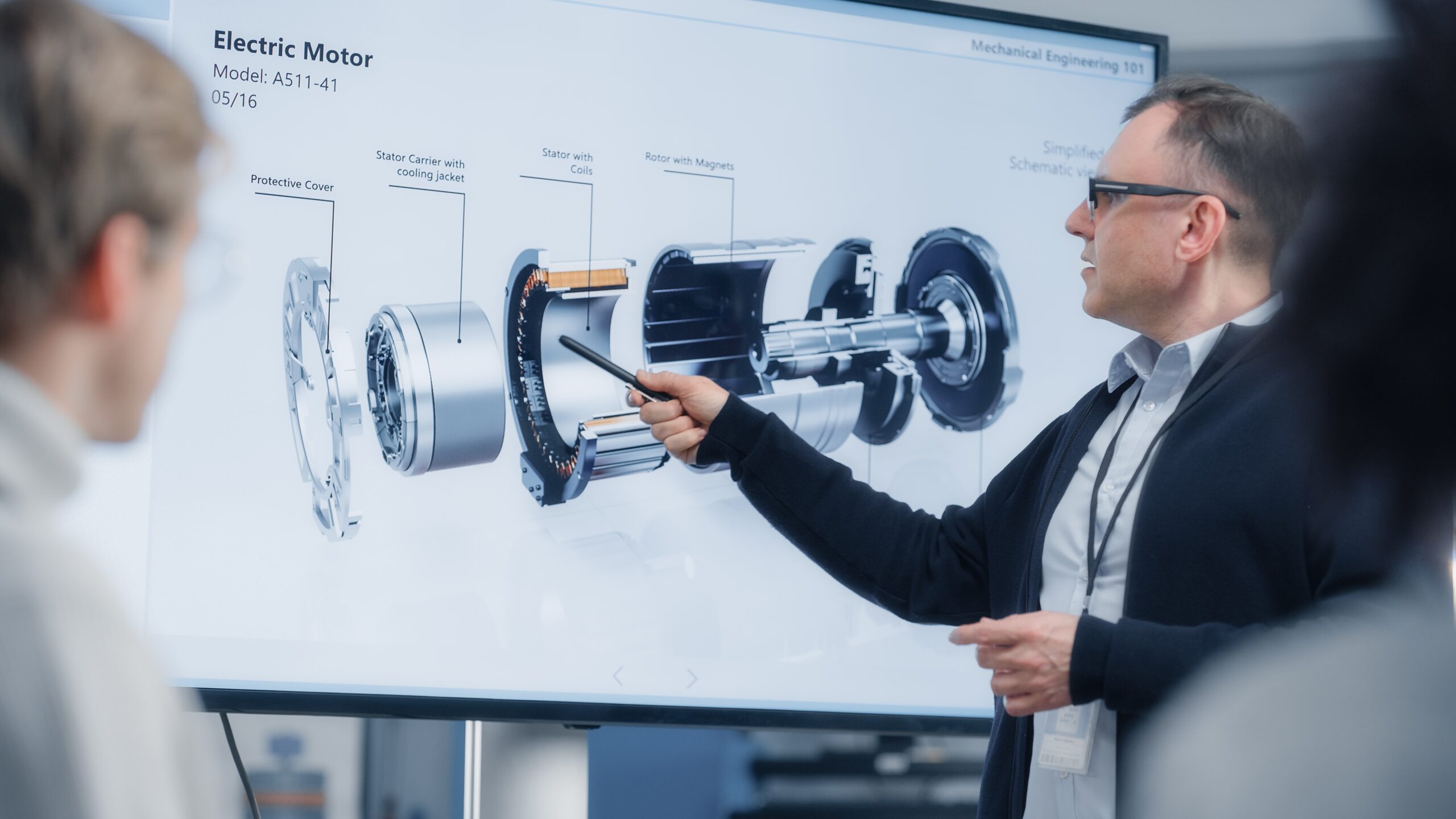
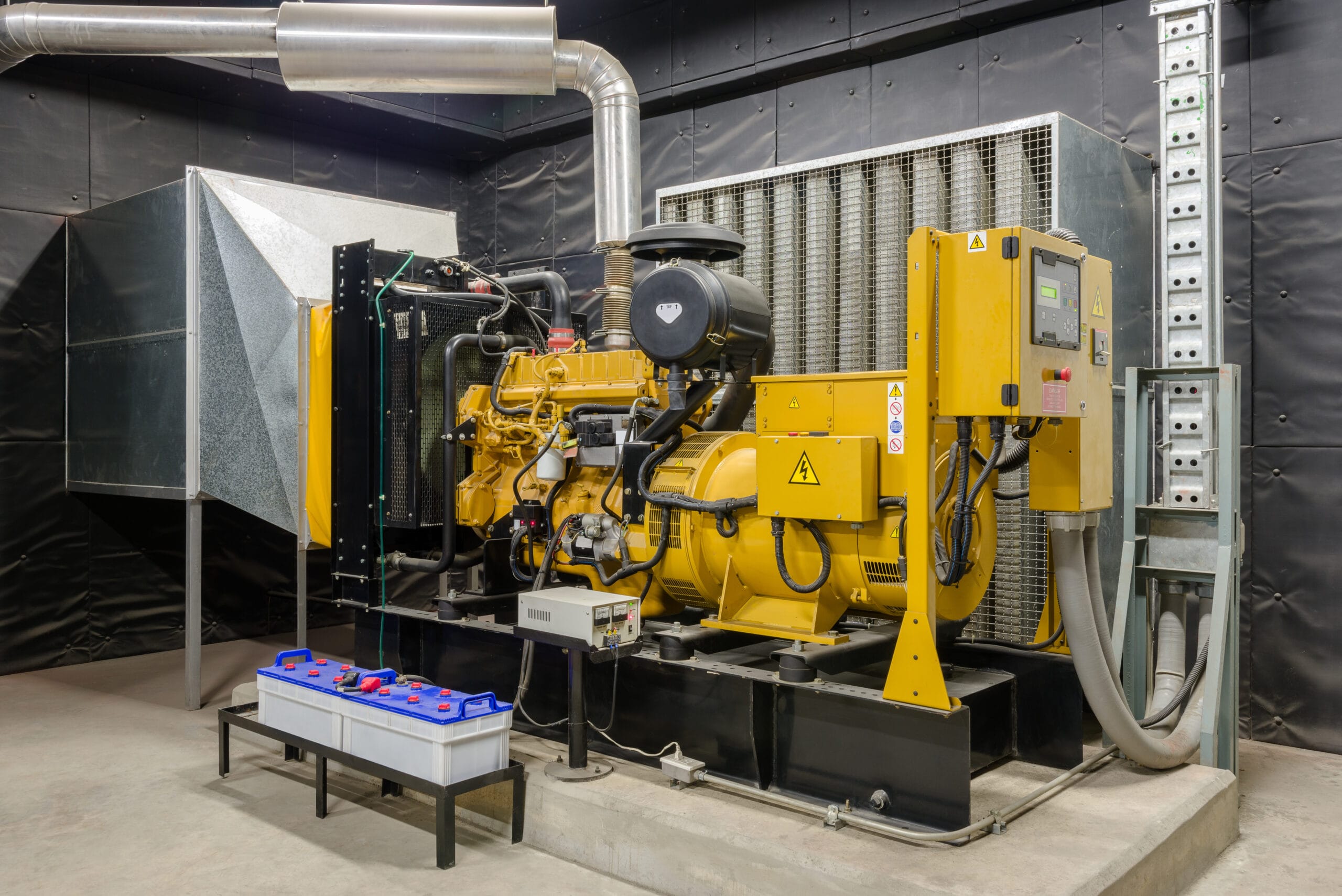
Electrical feeder isolation is among the most safety-critical procedures in oil & gas refinery operations — a single misstep in the Lockout-Tagout (LOTO) sequence can result in arc flash incidents, equipment damage, or fatalities. The client’s existing training relied on SOP documentation, classroom instruction, and on-site walkthroughs, but this approach had clear operational limitations:

  • Trainees could not practice the full isolation sequence without shutting down live equipment, and retention of the correct procedural order was inconsistent — particularly among new joiners and contract workers rotating across sites.
  • Classroom instruction could not replicate the time pressure, spatial orientation, and hazard recognition demands of the actual feeder room environment.
  • Training delivery varied between sites and instructors, and there was no scalable mechanism to assess individual procedural readiness before allowing personnel onto live systems.

The client needed a training solution that could replicate the complete operational workflow in a controlled, repeatable, and measurable environment — without exposing trainees to live electrical hazards.


OUR APPROACH

Using the iQ3Connect extended reality platform, we designed and developed a fully immersive Virtual Reality training simulation that digitally recreates the client’s feeder isolation environment and replicates the end-to-end LOTO procedure with engineering-grade fidelity.

The solution was purpose-built around the client’s actual SOPs, site-specific equipment configurations, and safety protocols — not a generic off-the-shelf module. Every interaction, sequence gate, and failure condition in the simulation maps directly to the client’s operational reality.


The platform was structured around two distinct training modes:

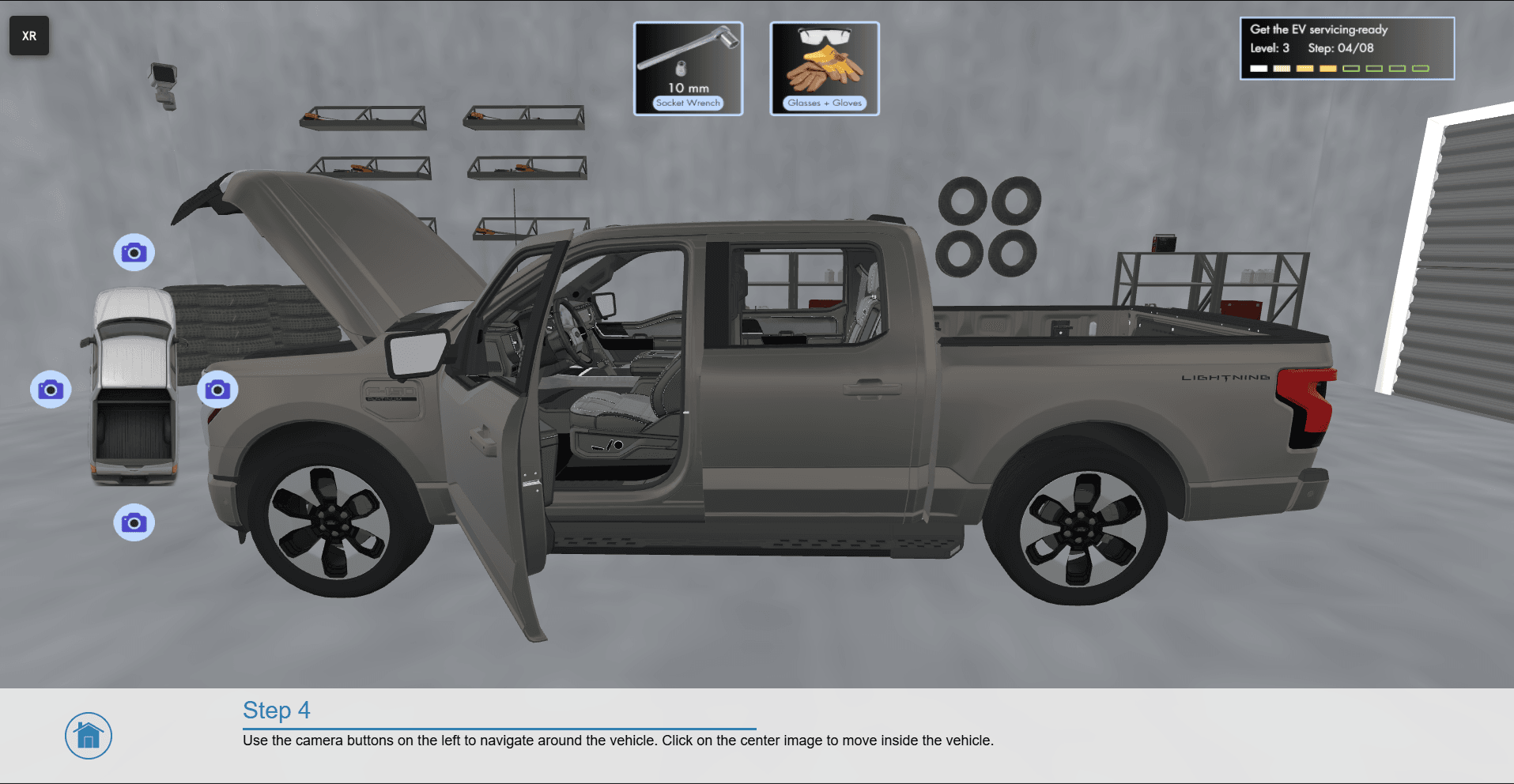
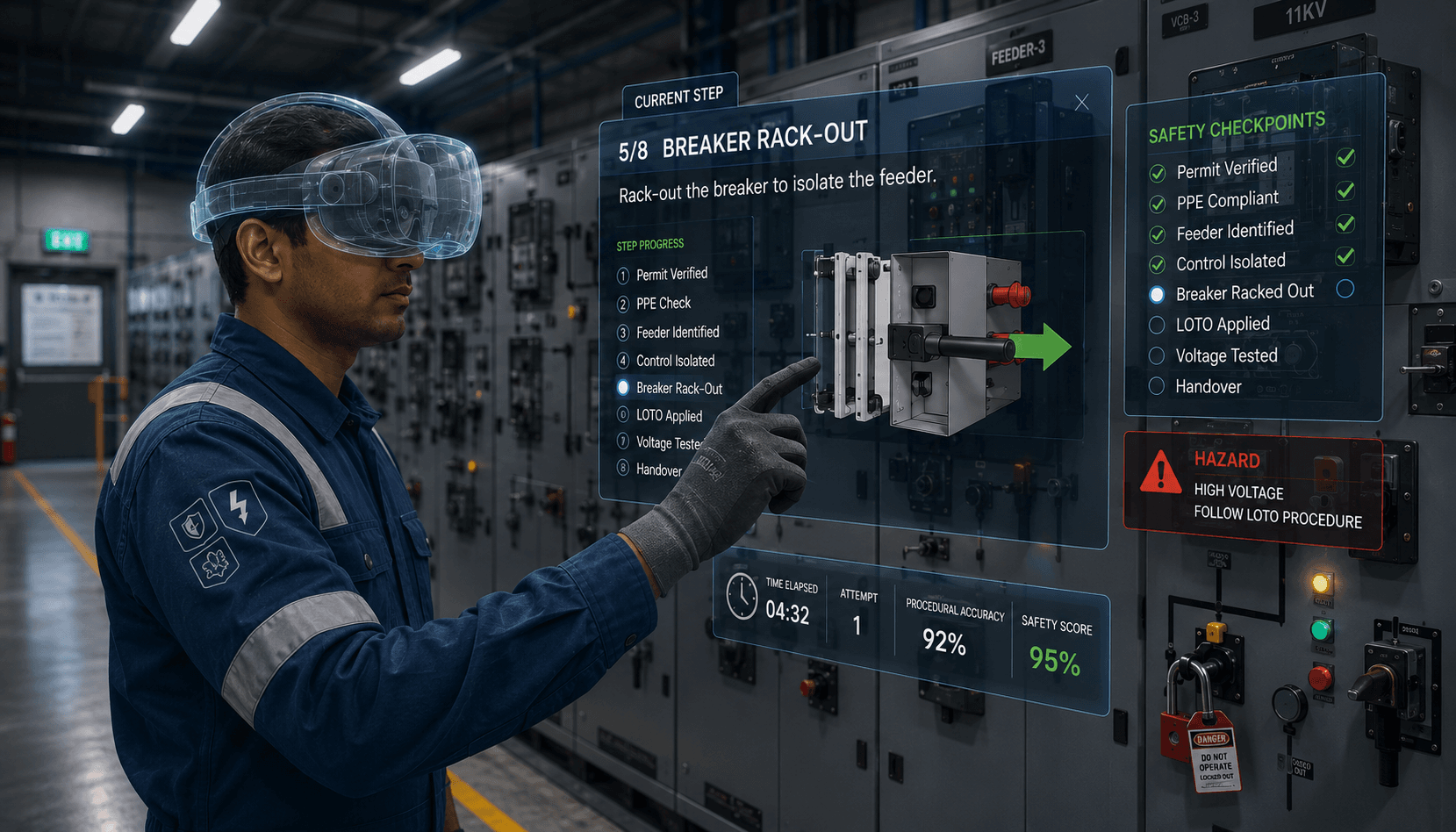
  1. Guided Learning Mode. A step-by-step immersive walkthrough with real-time narration, visual prompts, and contextual safety guidance. The trainee is guided through each stage of the isolation procedure — from permit verification and PPE sequencing through breaker rack-out and voltage absence testing. This mode builds foundational competence and allows unlimited repetition without operational risk.
  2. Independent Assessment Mode. An unguided simulation where the trainee executes the complete procedure independently. The system silently validates every action, sequence, and safety step in real time. Missed steps, incorrect sequences, and safety violations are captured automatically. At the end of each session, the platform generates a structured competency report.


SCOPE OF SIMULATED WORKFLOW

The VR simulation covers the complete isolation lifecycle as performed in the client’s operational environment:

  1. Isolation permit and documentation verification
  2. PPE compliance check and correct safety gear sequencing
  3. Feeder identification and equipment state confirmation
  4. Control isolation and switching procedures
  5. Breaker rack-out and physical LOTO implementation
  6. Hazard recognition — identification of unsafe conditions in the environment
  7. Voltage absence testing and discharge procedures
  8. Safe maintenance handover to the working team

Each stage includes contextual decision points and failure paths. For example, if a trainee attempts to rack out a breaker without first confirming voltage absence, the simulation flags the violation and — in assessment mode — records it as a critical procedural failure.


ASSESSMENT & COMPETENCY TRACKING

The assessment engine was a key deliverable for the client. Beyond pass/fail scoring, it generates granular competency data that feeds directly into workforce planning and compliance processes.

Each completed assessment session produces a structured report capturing:

  • Procedural accuracy — whether all mandatory steps were executed correctly
  • Sequence compliance — whether steps were performed in the correct operational order
  • Safety violations — any PPE non-compliance, skipped verifications, or hazardous actions
  • Time-to-completion benchmarked against expected operational norms
  • Individual readiness scoring for clearance decisions

The platform was built to integrate with the client’s enterprise Learning Management System (LMS), enabling automated synchronisation of training records, assessment outcomes, and certification workflows across sites.


DEPLOYMENT STRATEGY

Given the client’s multi-site operations and distributed workforce, the solution was designed for flexible deployment across two delivery formats:

Immersive VR: Full simulation deployed on Meta Quest MR headsets for on-site training centres. This delivers the highest fidelity experience with spatial interaction, hand tracking, and full environmental immersion.

2D Desktop/Tablet: A parallel version of the same training module accessible via laptops and tablets. This enables remote access for employees at sites without VR hardware, contract workers during onboarding, and refresher training scenarios.

This hybrid approach allowed the client to deploy immersive training at primary refinery locations while extending reach to satellite offices, contractor pools, and remote teams without additional hardware investment.


RESULTS & OPERATIONAL IMPACT

The deployment delivered measurable improvements across training effectiveness, safety compliance, and operational efficiency:

Up to 40%
Improvement in procedural
retention vs. classroom
3X
More practice repetitions per
trainee per quarter
Zero
Live equipment exposure
during training
100%
Standardised delivery across
all sites
  • Trainees demonstrated significantly stronger recall of the correct isolation sequence and safety checkpoints, reducing reliance on SOP reference during live procedures.
  • Hands-on practice cycles increased substantially — trainees could repeat the full procedure multiple times in a single session, something impossible with live equipment walkthroughs.
  • Training delivery was fully standardised across sites, eliminating instructor-dependent variation and ensuring every operator received identical procedural instruction.
  • The assessment engine gave site safety leads a data-driven mechanism to evaluate individual readiness before granting live-system access, replacing subjective sign-off processes.
  • Dependence on planned maintenance windows for training was reduced, freeing operational schedules and decoupling training timelines from production cycles.
  • Contract and temporary workers could be onboarded and assessed remotely via the 2D module before arriving on site, reducing integration time.


This engagement demonstrated that VR is not limited to product visualization or equipment familiarization — it is a proven platform for digitizing, standardizing, and measuring compliance with complex, safety-critical operational procedures at enterprise scale. The iQ3Connect platform enabled rapid deployment across devices and sites, making immersive process training operationally viable for one of India’s largest industrial organizations.


Ready to Transform Your Customer Experience?

Discover how iQ3Connect can help your organization drive growth, resilience, and competitive advantage in the digital era.

Rethinking Career and Technical Education: Immersive Virtual Training as a Pathway to Workforce Readiness


Across the country, educators and policymakers are facing a fundamental question: How do we prepare students for the jobs of tomorrow when traditional classrooms and hands-on trade skills are both essential, yet increasingly out of reach for many?

A recent Marketplace.org article highlights this challenge, spotlighting a growing need for “career tech” programs that blend academic rigor with real-world, practical skills. Yet for many schools—especially in rural or under-resourced districts—the barriers to creating robust, hands-on training opportunities remain high.


Immersive Technology: Bridging the Gap

Immersive virtual training platforms like iQ3Connect are changing that equation. By leveraging digital environments, schools can deliver interactive 3D simulations, hands-on experiences, and industry collaboration—without the cost or logistical hurdles of physical labs.

This is not just about technology for technology’s sake. It’s about equity and opportunity: ensuring every learner, regardless of ZIP code, can access world-class technical education and real-world career pathways.


Policy in Action: The Sierra Space, CDLE, and iQ3Connect Partnership

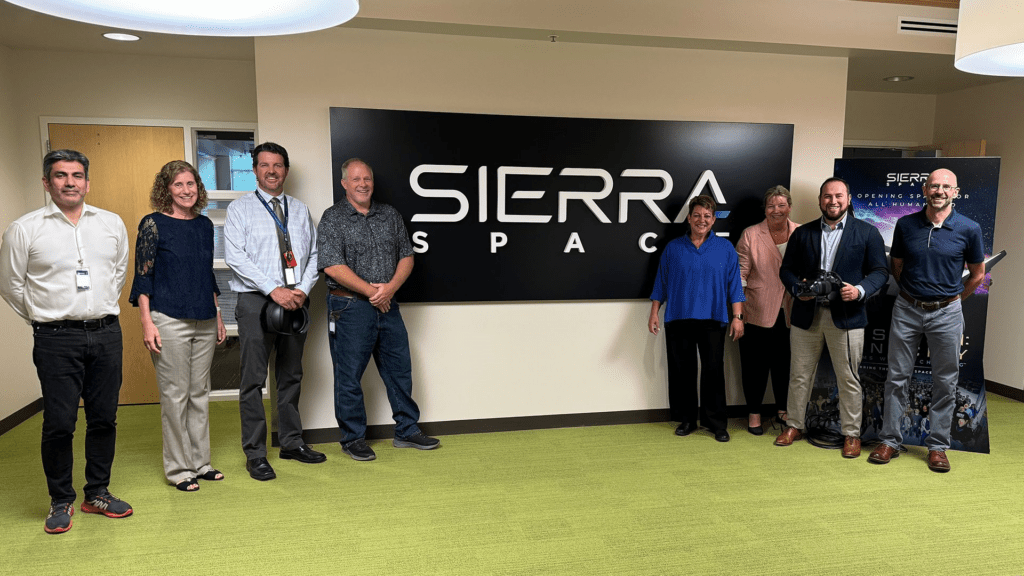
A standout example is the partnership between Sierra Space, the Colorado Department of Labor and Employment (CDLE), and iQ3Connect. Through this collaboration, Colorado high school teachers and students are gaining access to aerospace industry training via immersive virtual modules. Teacher externships provide educators with direct industry experience, which they translate into curriculum, bringing current, relevant skills back to their students.

This initiative demonstrates:

  • Affordability and Scalability: No need for each school to invest in expensive equipment or labs—virtual solutions scale across districts and regions.

  • Industry-Relevant Curriculum: Direct input from employers ensures education stays aligned with evolving workforce needs.

  • Professional Development for Teachers: Externships empower teachers with up-to-date knowledge and skills, enriching classroom instruction.


Why This Matters for Policy and Practice

  • Expanding Access: Digital, device-agnostic training reaches students and teachers everywhere, supporting state and national equity goals.

  • Supporting Workforce Pipelines: Programs like this help build a diverse, competitive talent pool ready to meet the needs of 21st-century industries.

  • Enabling Data-Driven Improvement: Virtual platforms make it easier to track learning outcomes and program impact—key for continuous improvement and policy evaluation.

As demand for skilled workers continues to rise, immersive virtual training is proving to be a powerful lever for advancing both education and workforce readiness. For educators and policymakers committed to preparing students for meaningful, high-demand careers, these solutions represent a practical, scalable, and future-focused path forward.


Explore how the Sierra Space, CDLE, and iQ3Connect partnership is paving the way for innovative, equitable career education here.

Case Study: Immersive CAD to VR Digital Prototyping for Industrial Equipment Manufacturers

Overview

A leading industrial equipment manufacturer, specializing in engineered solutions for sectors like compressed air, vacuum, and assembly systems, sought to accelerate product development while reducing costly design iterations. With increasing pressure to deliver high-quality, customized solutions faster, the company leveraged iQ3Connect’s immersive XR platform to transform its digital prototyping workflow.


Industry Challenge

In industrial manufacturing, the stakes are high:

  • Complex assemblies and machinery require robust cross-functional reviews.

  • Physical prototyping is expensive and time-consuming.

  • Missed design issues can result in costly rework, delayed launches, and dissatisfied customers.

  • Effective collaboration between engineering, service, and production is often limited by geography and siloed processes.


Solution: iQ3Connect Immersive Prototyping

By adopting iQ3Connect’s XR platform, the manufacturer enabled its teams to:

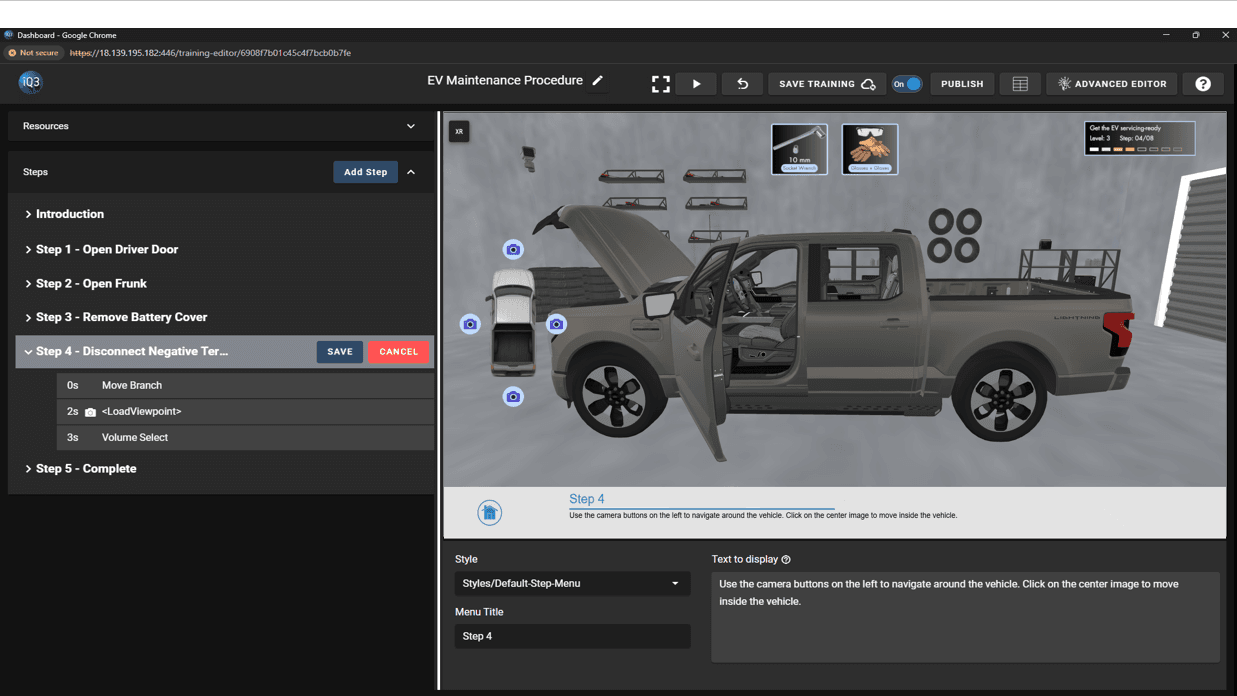
  • Instantly upload and visualize 3D CAD assemblies (Siemens JT, STEP, Autodesk Inventor, etc.) in a shared, interactive XR environment.

  • Perform detailed assembly and service reviews virtually, including for large and heavy equipment that’s difficult to access physically.

  • Empower engineering, service, and manufacturing teams to collaborate in real time, whether on-site or remote, using either untethered or tethered VR headsets.

  • Rapidly identify and address design flaws early in the product lifecycle, before any physical prototype is produced.


Business Outcomes

  • Accelerated Time-to-Market:
    Teams quickly iterated on virtual prototypes, making design changes in days—not weeks—resulting in faster NPD (new product development) cycles.

  • Higher Design Quality and Fewer Errors:
    Immersive reviews allowed stakeholders to “walk through” complex machinery, ensuring issues are caught and resolved early.

  • Enhanced Collaboration:
    Cross-disciplinary teams—including engineering, production, and after-sales—could participate in reviews regardless of location, fostering alignment and knowledge transfer.

  • Cost Savings:
    Early digital detection of flaws significantly reduced the need for multiple physical prototypes and associated rework costs.

  • Easy Integration:
    No specialized coding or new CAD workflows—just upload and go, fully compatible with existing digital assets and IT environments.


Implementation Insights

  • The platform is browser-based and runs securely on company servers, supporting enterprise IT policies and data security requirements.

  • Compatible with industry-standard VR headsets, it works in both wireless and tethered modes for flexibility in factory or office settings.

  • The intuitive interface enabled fast onboarding for both engineering teams and field service reviewers.


Scaling Digital Innovation

After seeing measurable success in initial pilots—improved agility, deeper reviews, and tangible cost reductions—the company is expanding immersive prototyping across more projects and business units. The result? A more competitive, agile, and customer-responsive organization, ready to lead in the evolving industrial landscape.


Are you an industrial equipment manufacturer seeking to modernize your product development? Discover how iQ3Connect can help you accelerate innovation, reduce costs, and deliver higher-value solutions—contact us today for a tailored demo.

Case Study: Sierra Space Accelerates Engineering Collaboration and Launch Preparation with iQ3Connect

Background

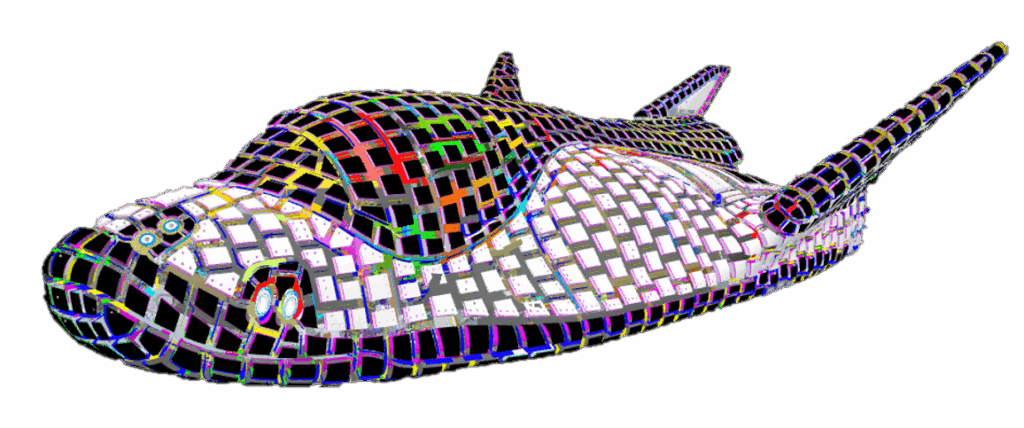
Sierra Space — Aerospace and space technology leader, developer of the Dream Chaser® spaceplane and advanced satellite vehicles.


Challenge

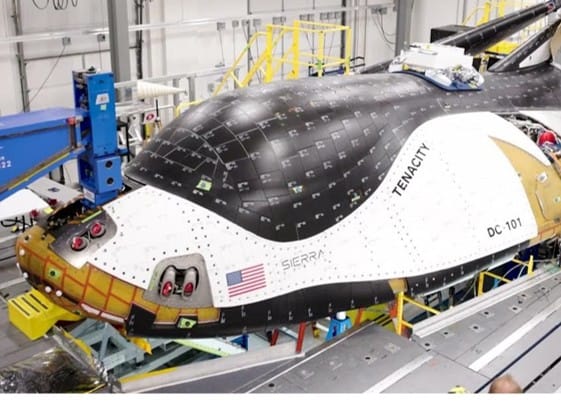
Sierra Space manages some of the world’s most complex engineering projects, including the Dream Chaser® Tenacity, with over one million components. Their teams needed a scalable way to:

  • Visualize and collaborate on massive 3D assemblies, regardless of device or location

  • Minimize costly and time-consuming custom software development

  • Support critical launch preparation and contractual design evaluations across distributed engineering teams


Solution

iQ3Connect delivered a device-agnostic, WebXR-enabled platform for real-time 3D collaboration:

  • Dream Chaser® Tenacity (1M+ components) and full satellite vehicle assemblies now run smoothly in multi-user, multi-device workspaces—including on tablets and smartphones

  • Engineering teams access, review, and manipulate large-scale 3D models instantly—no downloads or custom builds required

  • SSO integration enables secure, organization-wide access; WebXR supports both desktop and mobile experiences


Business Outcomes

  • Dramatic Efficiency Gains:
    Engineering tasks that previously required up to four weeks of custom development can now be completed in as little as four hours.

  • Rapid Adoption and Internal Impact:
    Multiple engineering teams were able to demonstrate the platform internally and externally within hours of receiving training

  • Immediate Program Value:
    Integrated into Tenacity’s digital closeout and launch prep, iQ3Connect has already supported multiple DFX (Design for X) evaluations to fulfill contractual and compliance requirements

  • Enterprise Collaboration Unlocked:
    Teams can review, discuss, and resolve design issues in real time, on any device—speeding up decision-making and reducing barriers to innovation


Conclusion

By leveraging iQ3Connect, Sierra Space has transformed how its teams interact with their most complex digital assets—accelerating engineering cycles, streamlining launch preparation, and fulfilling mission-critical contractual obligations with unmatched speed and flexibility.

Case Study: Leveraging Virtual Reality for Steel Bridge Construction – Yokogawa Bridge Corporation

Background

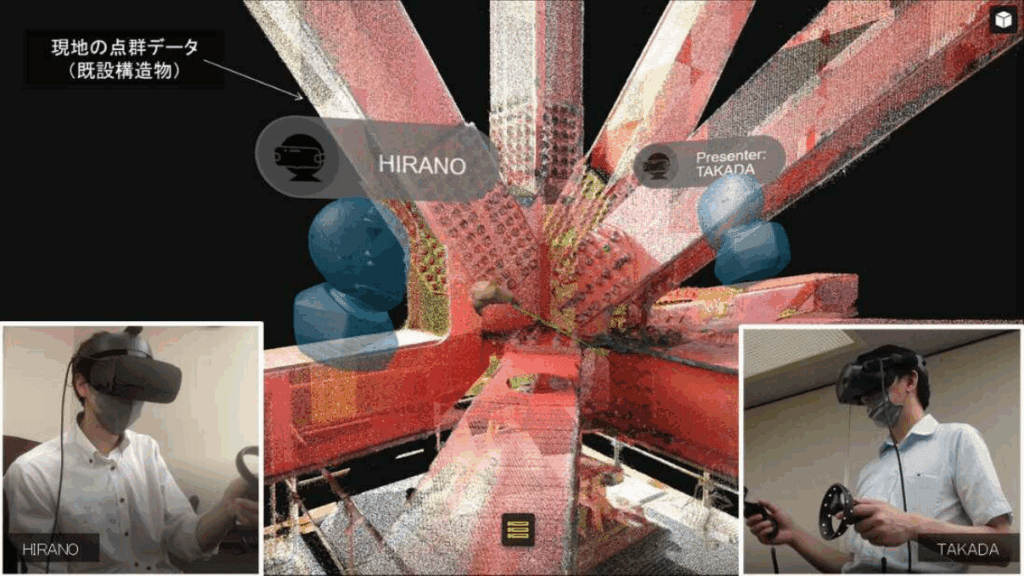
Yokogawa Bridge Corporation, a leader in Japan’s steel bridge construction industry, sought innovative solutions to enhance their engineering workflows, improve communication, and reduce errors throughout the design and construction process.


Challenge

Traditional review methods relied on printed drawings and physical meetings, which made it difficult to identify complex design issues early, coordinate among distributed teams, and effectively communicate with clients and partners.


Solution

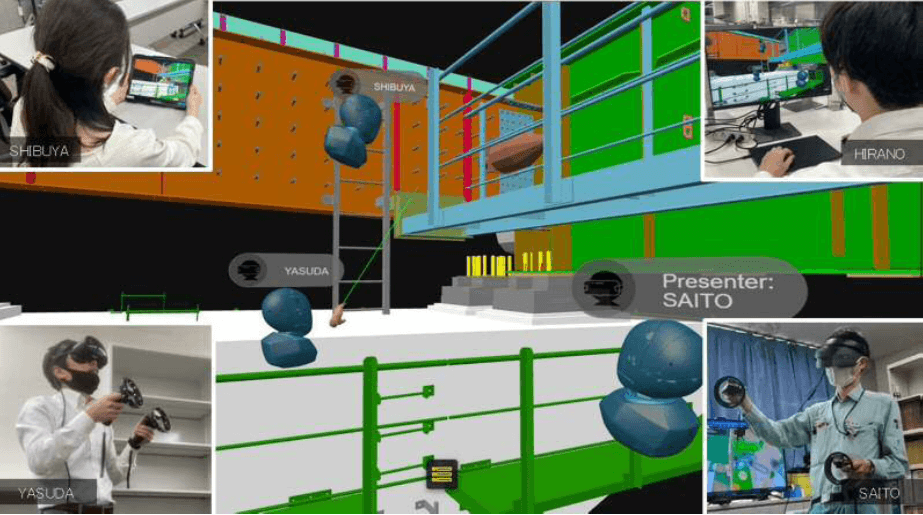
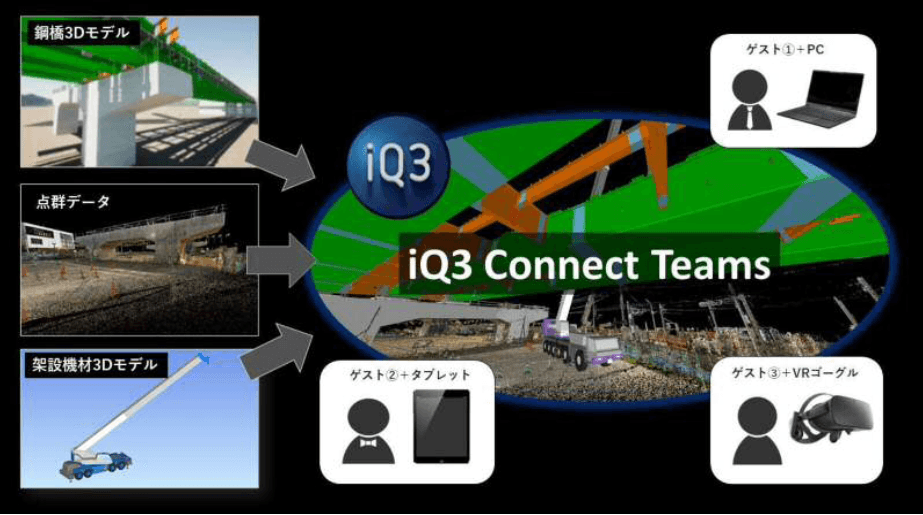
By adopting iQ3Connect’s web-based VR platform, Yokogawa Bridge was able to visualize full-scale 3D models of their steel structures in immersive virtual environments and seamlessly combine CAD with reality capture LIDAR scan data of their sites. Engineers, designers, and stakeholders could now review detailed bridge models collaboratively from any location—using VR headsets, PCs, or tablets—without requiring specialized software or complex installations.


Results

  • Improved Design Review: Teams detected and addressed design inconsistencies and interferences early in the process, reducing costly rework during fabrication and assembly.

  • Enhanced Communication: Virtual meetings in 3D environments enabled clear, intuitive discussions and decision-making among engineers, partners, and clients.

  • Cost & Time Savings: Remote VR sessions eliminated the need for frequent travel and streamlined review cycles, accelerating project delivery.

  • Safer Training: VR also provided a risk-free environment for operator and safety training, further supporting workforce development.


Conclusion

Yokogawa Bridge’s deployment of iQ3Connect’s VR platform marks a significant step in digital transformation for steel construction, setting a precedent for how immersive technology can drive efficiency, safety, and collaboration in complex engineering projects.


Reference: Nikkei Article: “A Bridge Built in Virtual Space” (Japanese)

Icon

Form Submitted!

Thanks for submitting the form. An iQ3Connect representative will be reaching out to you shortly. In the meantime, please feel free to review some of our resources below.

Icon

Form Submitted!

Thanks for submitting the form. An iQ3Connect representative will be reaching out to you shortly. In the meantime, please feel free to review some of our resources below.

Icon

Form Submitted!

Thanks for submitting the form. An iQ3Connect representative will be reaching out to you shortly. In the meantime, please feel free to review some of our resources below.

Icon

Form Submitted!

Thanks for submitting the form. An iQ3Connect representative will be reaching out to you shortly. In the meantime, please feel free to review some of our resources below.