Introduction
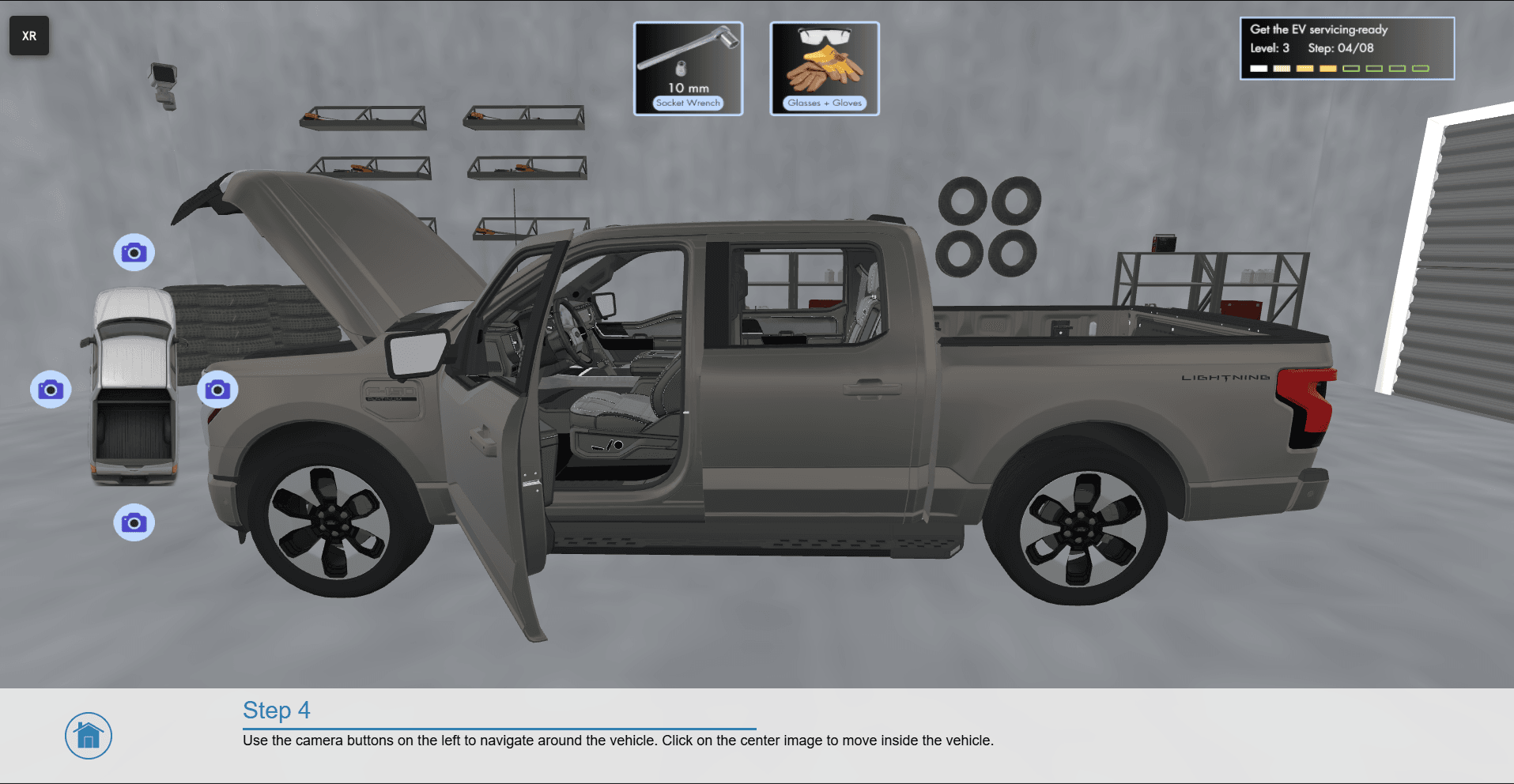
A few years ago, enterprise XR was mostly discussed as an innovation initiative. Companies experimented with virtual reality training and augmented reality maintenance tools, but most deployments remained limited to pilot programs.
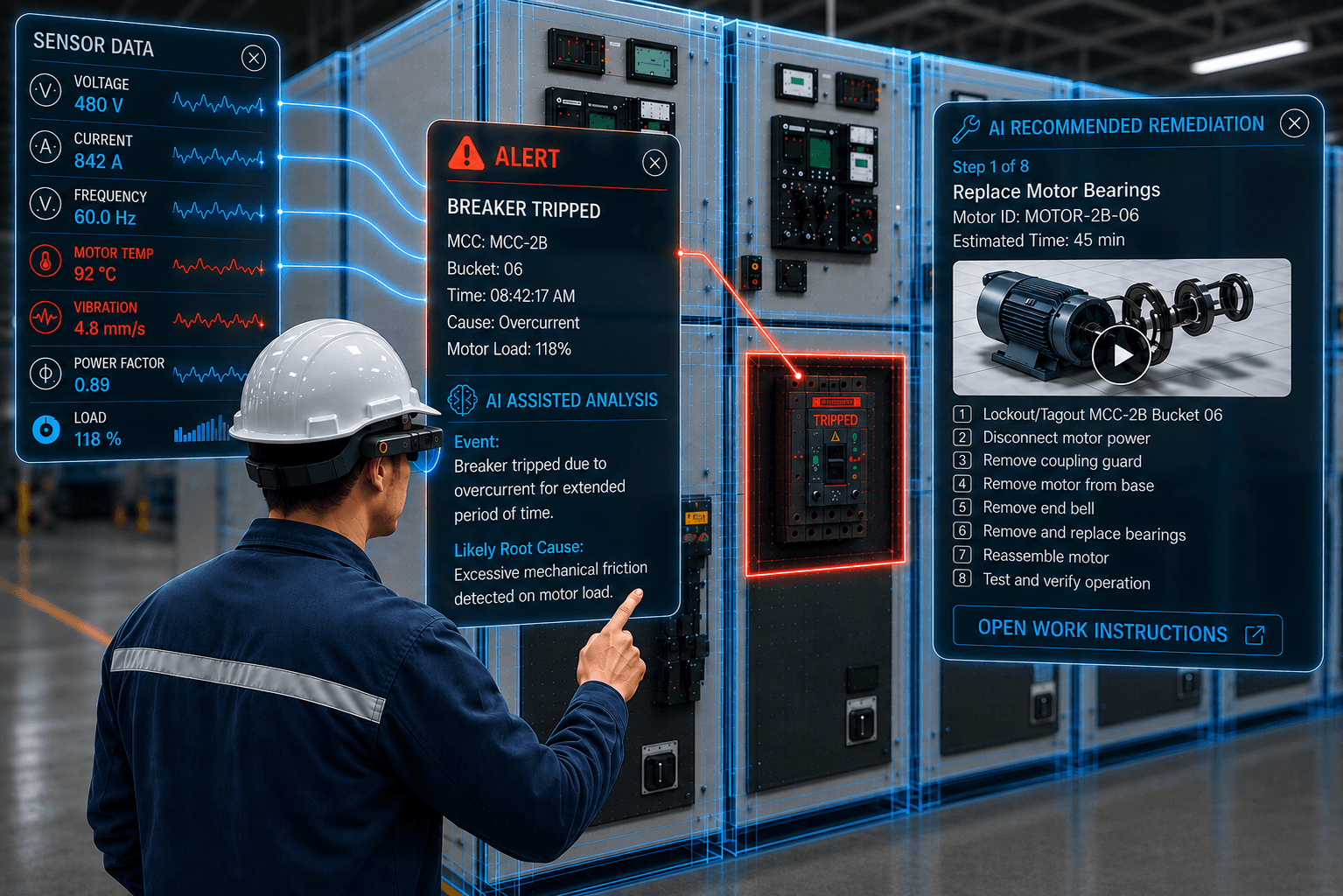
Today, the conversation has changed. Manufacturers are using immersive environments to train technicians, engineering teams are reviewing CAD models in 3D, energy companies are simulating hazardous scenarios, and field workers are receiving remote expert guidance through spatial interfaces. XR is no longer a futuristic experiment—it is becoming part of the enterprise technology stack.
The question is no longer “Should we try XR?” The real question is “How do we scale XR across sites, teams, and devices without creating operational complexity?”
In this article, we explore:
Where enterprise XR stands in 2026
Why adoption is accelerating
What is preventing wider deployment
Which technologies are shaping the next phase of enterprise XR
How organizations can choose a platform built for scale
Enterprise XR Has Crossed the Early Adoption Phase
Enterprise XR has moved beyond the experimental stage because several technology shifts have converged.
Spatial computing has become mainstream
Apple’s Vision Pro, Meta’s Quest ecosystem, and Google’s Android XR initiative have brought spatial computing into mainstream enterprise discussions. Organizations are now evaluating immersive workflows alongside cloud, AI, and analytics strategies rather than treating XR as a separate innovation track.
Hardware is becoming more accessible
Standalone headsets have reduced deployment friction by eliminating the need for high-end PCs. Devices are lighter, easier to manage, and increasingly designed for enterprise use cases such as training, collaboration, and field support.
WebXR has matured
Modern browsers now support immersive experiences through open standards, allowing organizations to deliver XR content without installing complex native applications. This is one of the most important shifts for enterprise scalability.
AI is reducing content creation barriers
Generative AI is accelerating 3D asset creation, scenario generation, voice interactions, and multilingual training content. What previously required large development teams can now be prototyped much faster.
Digital transformation is driving operational XR use cases
Manufacturing, energy, healthcare, and aerospace organizations are increasingly connecting XR with digital twins, IoT data, and operational analytics to improve productivity and reduce downtime.
Where Businesses Are Actually Using XR Today
The most successful deployments are not organized around “VR projects.” They are organized around business outcomes.
Business Need | XR Application | Usecase |
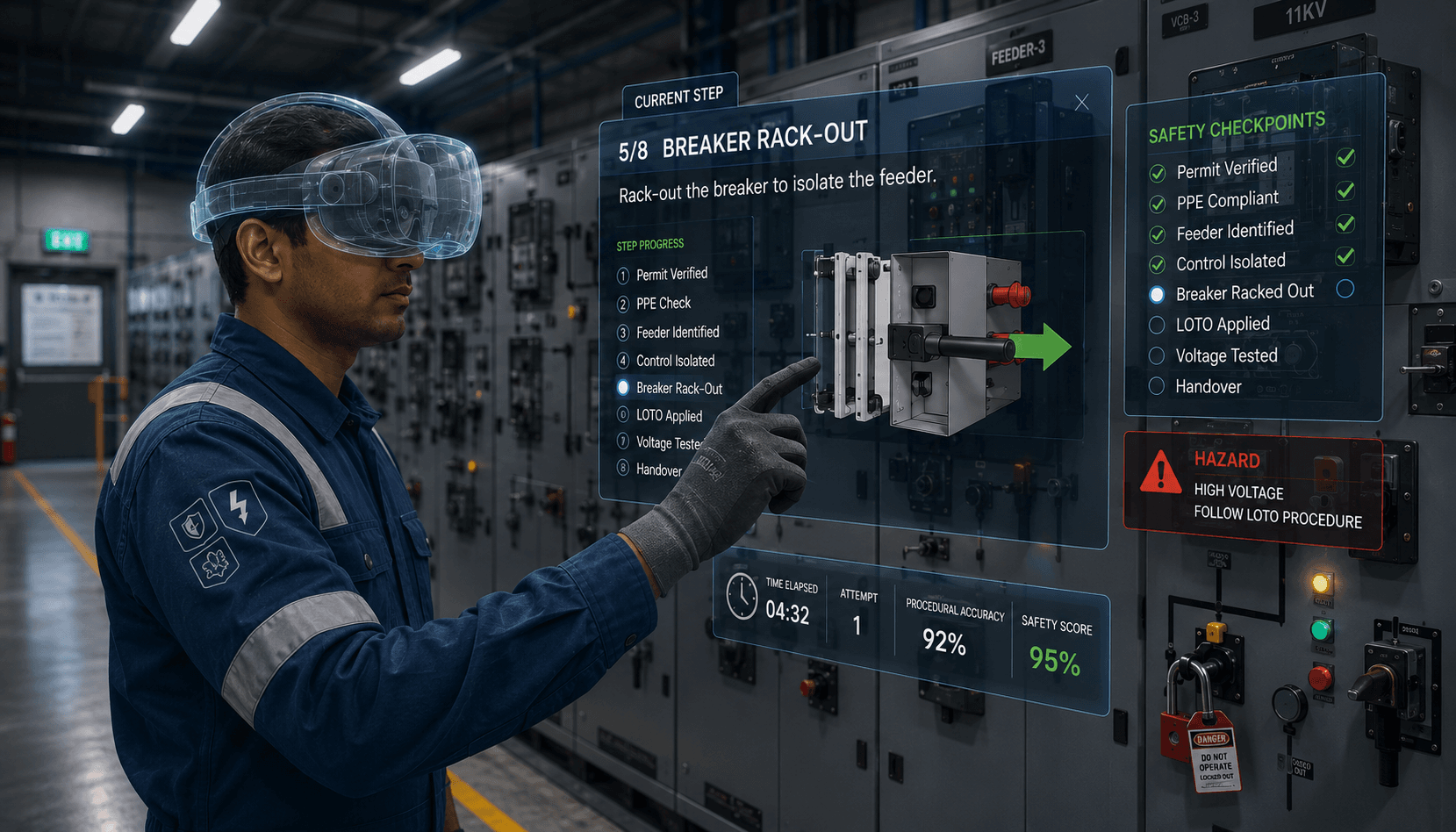
Workforce Training | Safety training, SOP simulations, onboarding | https://iq3connect.com/case-study-vr-lockout-tagout-training/ |
Manufacturing | Digital twins, process visualization | https://iq3connect.com/use-cases/digital-twins-software/ |
Engineering | CAD design reviews, collaborative prototyping | https://iq3connect.com/use-cases/3d-product-collaboration/ |
Maintenance | Remote expert assistance, guided repair | https://iq3connect.com/industries/virtual-augmented-reality-training-for-manufacturing |
Energy & Utilities | Hazard simulations, emergency response | https://iq3connect.com/industries/oil-gas-vr-ar |
Why these use cases generate measurable ROI
Training reduces instructor dependency and allows repeatable practice.
Digital twins improve situational awareness before physical changes are made.
Collaborative design reviews reduce prototype iterations.
Remote assistance decreases travel and speeds up problem resolution.
Interactive product demos improve customer engagement and shorten sales cycles.
The Business Case Is Already Proven
The business value of immersive learning is no longer theoretical. Recent enterprise research shows that XR can improve training effectiveness, employee confidence, and operational readiness.
Deloitte’s 2025 immersive learning research highlights that organizations are increasingly adopting XR for workforce development because it enables realistic practice in a controlled environment. Employees can repeat procedures safely, receive immediate feedback, and build confidence before performing tasks in the field.
If XR Works So Well, Why Isn’t Everyone Using It?
This is where many articles stop. The real challenge is not whether XR delivers value—it often does. The real challenge is deployment.
Enterprise teams quickly discover that scaling immersive applications introduces operational complexity:
Device provisioning
Headset management
Software updates
Version control
Security reviews
Multiple operating systems
Content distribution across locations
A pilot with 10 users is relatively easy. A deployment across 5 factories, 2 countries, and 1,000 employees is a completely different problem.
This is the turning point in enterprise XR. The winners are not simply the companies with the most impressive demo. They are the companies that make immersive experiences easy to deploy, update, secure, and access.
The Industry Is Moving Toward Browser-Based XR
The shift toward browser-based XR mirrors what happened in enterprise software over the last two decades.
Previous Era | Current Era |
| Desktop Office | Microsoft 365 |
| Installed CRM | Cloud CRM |
| Native Mobile Apps | Browser Applications |
| Native VR Applications | Browser-Based XR |
Why is this happening?
No installation required
Instant updates
Centralized content management
Easier IT governance
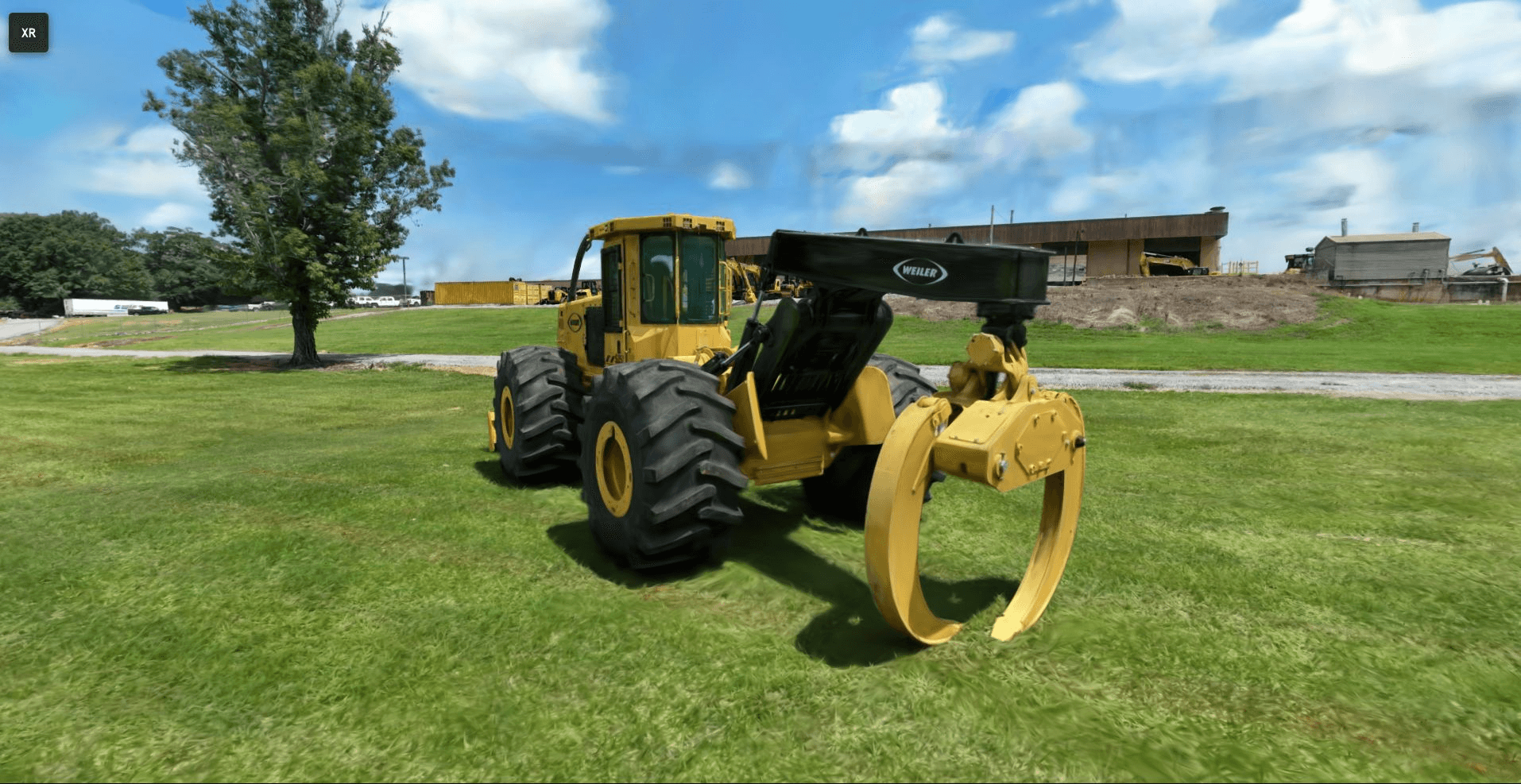
Access from laptops, tablets, phones, and headsets
Lower support overhead
A browser-based approach treats immersive experiences more like a cloud service than a standalone application.
This is the philosophy behind iQ3Connect. Experiences are delivered through the browser, allowing organizations to share XR training, collaboration spaces, and digital twin environments through a simple link instead of managing complex software deployments.
Open Standards Are Changing Enterprise XR
One of the most important developments in enterprise XR is the rise of WebXR, an open standard developed through the W3C.
WebXR enables immersive experiences to run across different browsers and devices, reducing dependence on a single hardware vendor.
Why open standards matter
Cross-device compatibility
Reduced vendor lock-in
Longer content lifespan
Easier integration with existing web infrastructure
Future-proof investment
For enterprise leaders, this is similar to choosing web technologies over proprietary desktop frameworks. Open standards provide flexibility as hardware ecosystems evolve.
Five Trends Defining the Next Generation of Enterprise XR
1. AI-Assisted Content Creation
AI tools are accelerating 3D model generation, training scenario creation, voice narration, and multilingual localization. This reduces production time and allows organizations to update training content more frequently.
2. Browser-First Deployment
Organizations increasingly prefer solutions that can be launched from a URL rather than installed on every device. Browser-first deployment simplifies IT operations and improves adoption.
3. Digital Twins Become Operational
Digital twins are moving from visualization tools to operational platforms that combine CAD data, IoT signals, and real-time analytics. XR provides an intuitive spatial interface for interacting with those twins.
4. Spatial Collaboration Expands
Engineering, maintenance, and project teams are collaborating inside shared 3D environments where they can review designs, annotate components, and make decisions together regardless of location.
5. Device-Agnostic Experiences Win
The most scalable platforms are those that work across VR headsets, AR devices, tablets, laptops, and desktop browsers. Accessibility drives adoption.
What Enterprise Leaders Should Look for in an XR Platform
Browser Deployment
Why it matters: Eliminates installation barriers and simplifies IT management.
Native CAD Support
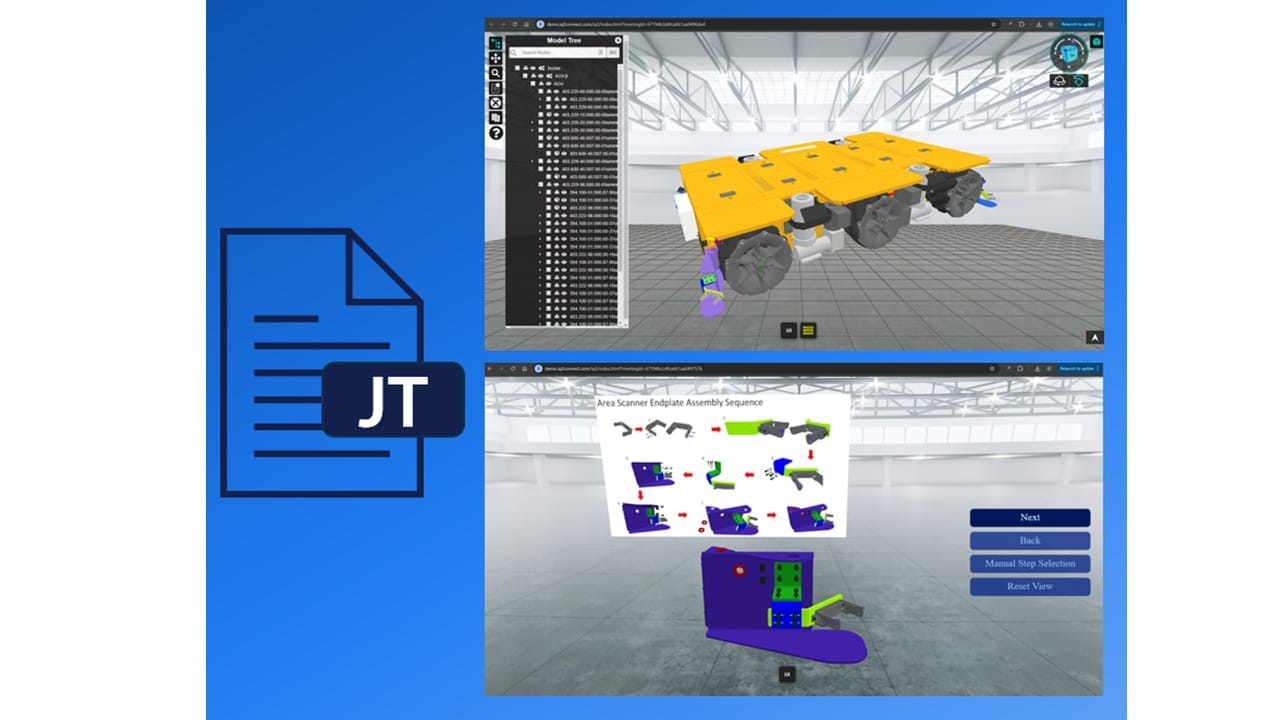
Why it matters: Engineering teams need accurate visualization of CATIA, Siemens NX, Creo, SolidWorks, and other industrial formats without manual conversion.
LMS Integration
Why it matters: Learning teams need training records, completion tracking, and compliance reporting.
Analytics
Why it matters: Executives need visibility into usage, engagement, and training performance.
Multi-Device Access
Why it matters: Adoption increases when employees can participate using the devices they already have.
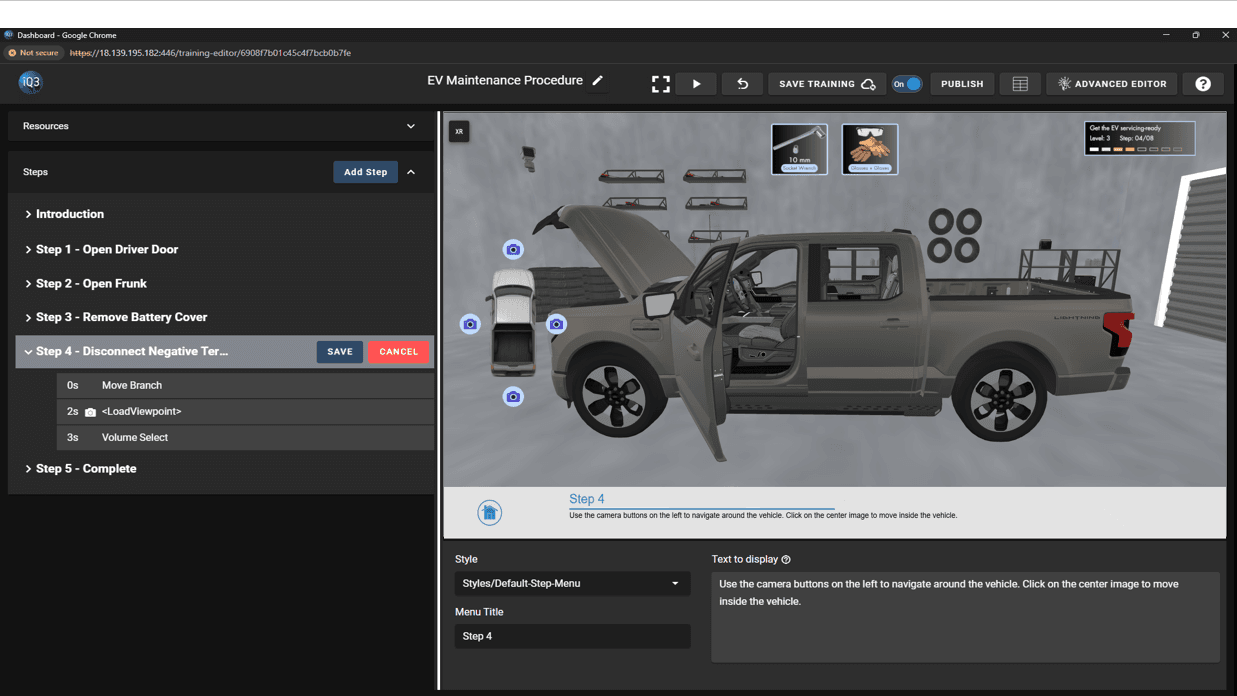
No-Code Authoring
Why it matters: Subject matter experts should be able to create and update content without relying entirely on developers.
These capabilities are increasingly becoming baseline requirements for enterprise-scale XR.
How iQ3Connect Helps Enterprises Scale XR
Rather than positioning XR as a standalone app, iQ3Connect is designed as a browser-based enterprise XR platform.
Key capabilities include:
WebXR delivery through a browser
No-code and advanced authoring options
Native CAD and 3D format support
Multi-device access (VR, desktop, tablet, mobile)
LMS integration for training workflows
Centralized content management
Collaborative 3D workspaces
Digital twin visualization
This approach helps organizations address the deployment challenges discussed earlier—especially version control, device compatibility, and large-scale content distribution.
Looking Ahead: The Next Phase of Enterprise XR
The next phase of enterprise XR will be defined by the convergence of AI, spatial computing, digital twins, and cloud infrastructure.
We are moving toward a world where:
AI generates immersive training environments on demand.
Remote experts appear as spatial collaborators.
Persistent digital twins mirror factory operations in real time.
Mixed reality interfaces become part of daily industrial workflows.
The browser becomes the operating system for immersive work.
The organizations that benefit most will not necessarily be those with the largest XR budgets. They will be the ones that build accessible, scalable, secure, and interoperable immersive infrastructure.
Conclusion
Enterprise XR has already proven that it can improve training, collaboration, design review, and operational performance.
The next challenge is not creating impressive immersive experiences. It is making those experiences easy to access, easy to manage, and easy to scale across the enterprise.
Browser-based delivery, open standards, device-agnostic access, and centralized management are becoming the foundation of enterprise XR adoption.
Organizations that solve those deployment challenges today will be best positioned to benefit from the next decade of spatial computing—and platforms such as iQ3Connect are emerging specifically to help enterprises make that transition from isolated pilots to scalable immersive infrastructure.