As enterprises navigate economic uncertainty and rapid advances in AI, the focus is shifting from technology investments to measurable business outcomes.
Artificial intelligence continues to attract enormous investment and attention. Yet recent market volatility, evolving regulatory expectations, and persistent economic uncertainty are raising an important question for business leaders: How do we translate technology investments into sustainable productivity improvements?
Recent commentary by economist Mohamed El-Erian highlights the contrast between financial-market volatility and the resilience of the underlying economy, including encouraging productivity trends.
For industrial enterprises, this reinforces an important lesson: long-term competitive advantage comes not simply from adopting new technologies, but from applying them to solve operational problems, improve workforce performance, and deliver measurable returns.
1. Productivity, Not Technology Adoption, Is the Real Objective
Industrial companies face persistent challenges: skilled labor shortages, increasingly complex equipment, geographically distributed teams, and the high cost of training and supporting workers.
Traditional approaches to technical training often depend on physical equipment, experienced instructors, travel, and lengthy documentation. These methods can be expensive, difficult to scale, and inconsistent across locations.
Digital technologies offer an opportunity to change this model.
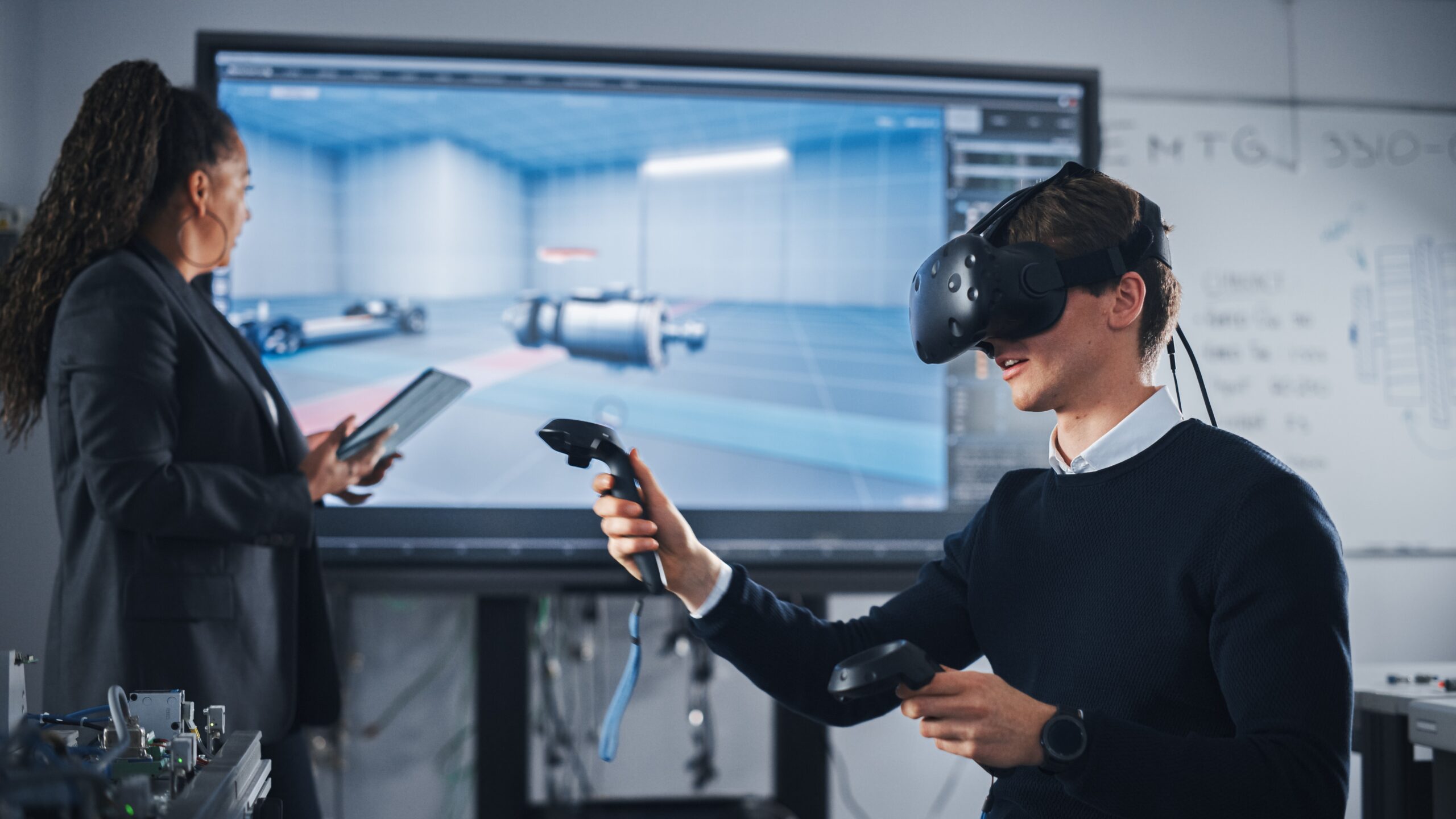
Interactive 3D training, digital work instructions, and immersive collaboration enable organizations to:
Train technicians without requiring continuous access to physical equipment.
Standardize technical procedures and assessments across facilities.
Reduce travel and dependence on experienced subject matter experts.
Improve knowledge retention through hands-on, repeatable practice.
Accelerate workforce readiness for complex equipment and procedures.
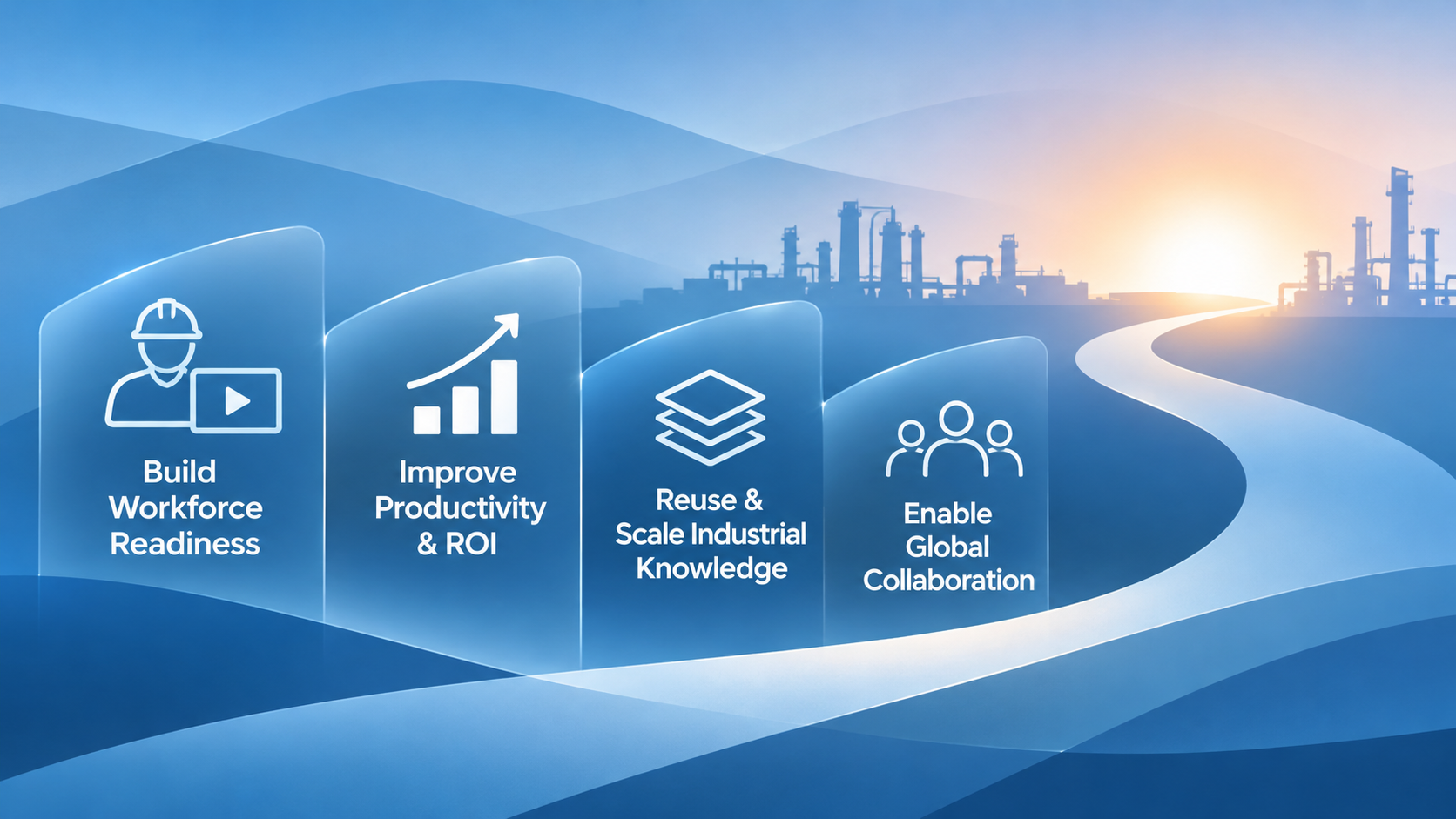
The business value is not in the immersive technology itself. It is in reduced training costs, improved worker readiness, faster knowledge transfer, and more consistent operational performance.
These are measurable productivity improvements that remain valuable regardless of fluctuations in technology markets.
Real-World Example: Improving Electrical Isolation Training in a Refinery
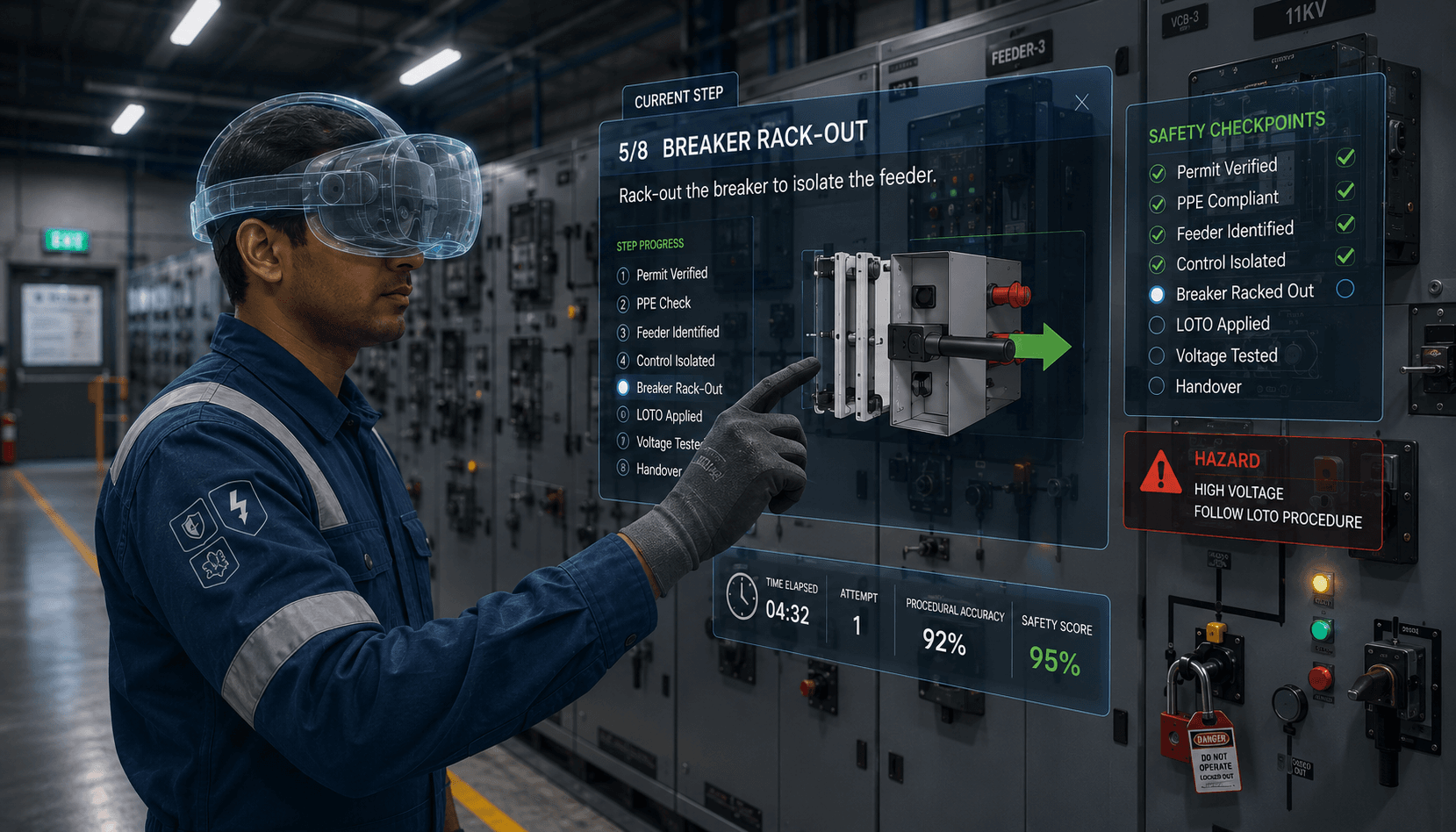
A Fortune 500 energy company faced the challenge of training technicians on complex, safety-critical electrical isolation and Lockout-Tagout (LOTO) procedures across refinery operations.
Traditional training relied heavily on written standard operating procedures, classroom instruction, and site walkthroughs. Opportunities to practice were constrained by access to equipment, operational schedules, and safety considerations.
Working with the customer’s engineering and safety subject matter experts, iQ3Connect co-developed an interactive digital training and assessment solution that recreated the electrical isolation procedure in a safe, virtual environment.
Technicians could practice the complete procedure, receive step-by-step guidance, and demonstrate competency through assessments without interacting with energized equipment.
The reported results demonstrate the practical value of this approach:
40% improvement in procedural knowledge retention compared with classroom training.
3× more practice repetitions per trainee per quarter.
100% standardized training delivery across participating sites.
Zero exposure to live electrical equipment during virtual training.
Beyond these outcomes, the approach enabled the organization to reduce dependence on physical equipment availability and provide repeatable, consistent training for distributed teams.
Importantly, the customer’s subject matter experts were able to participate directly in developing and maintaining the training, supporting long-term scalability.
This example illustrates how digital technology can deliver measurable improvements in workforce readiness, safety, and operational efficiency without requiring an organization to overhaul its entire training infrastructure.
Read the full electrical isolation and LOTO training case study.
2. AI Should Accelerate Operational Value, Not Become the Entire Strategy
AI has enormous potential to improve how industrial knowledge is created, delivered, and maintained. However, successful enterprise adoption requires more than adding an AI assistant to an existing application.
Consider the process of developing technical training for complex industrial equipment.
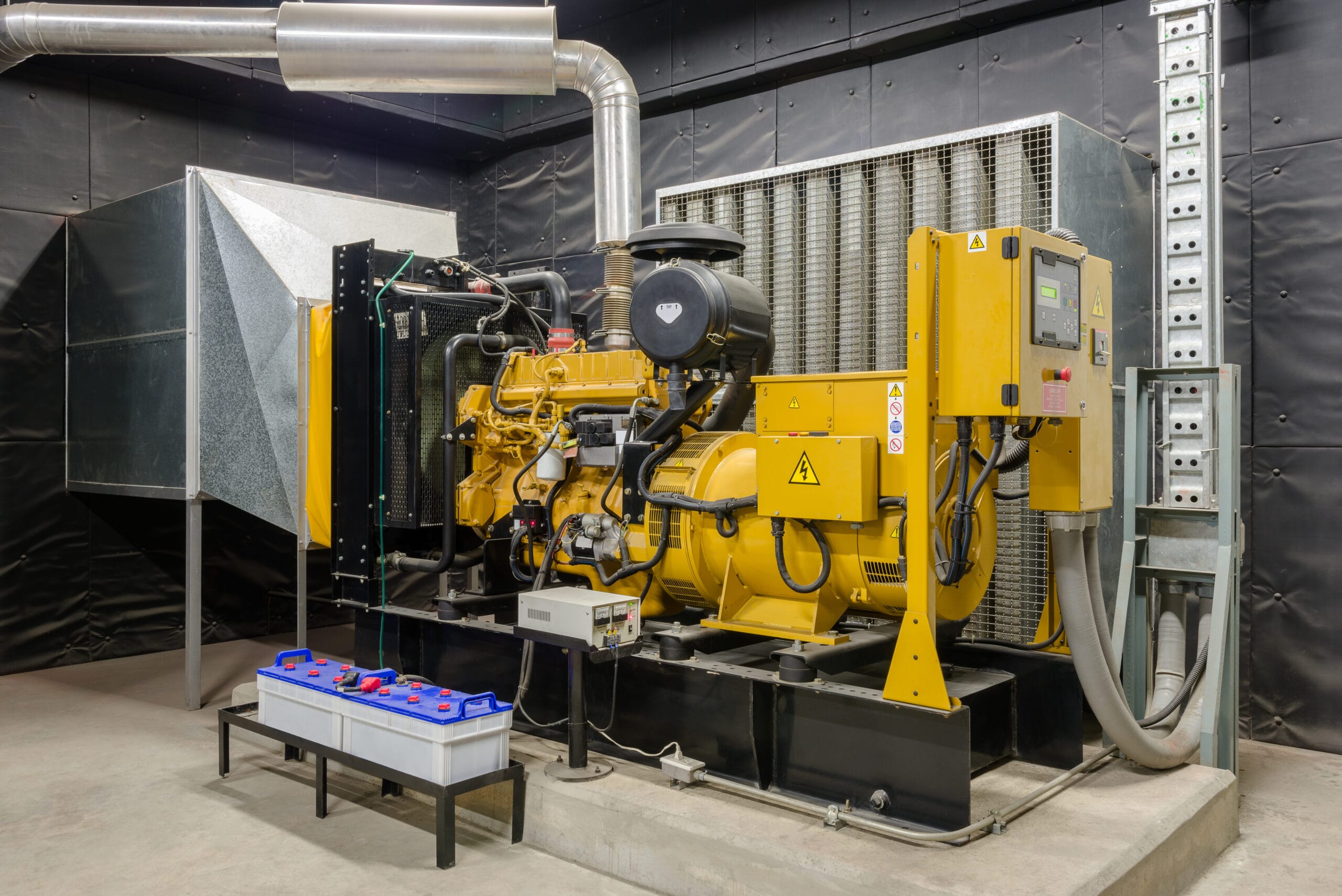
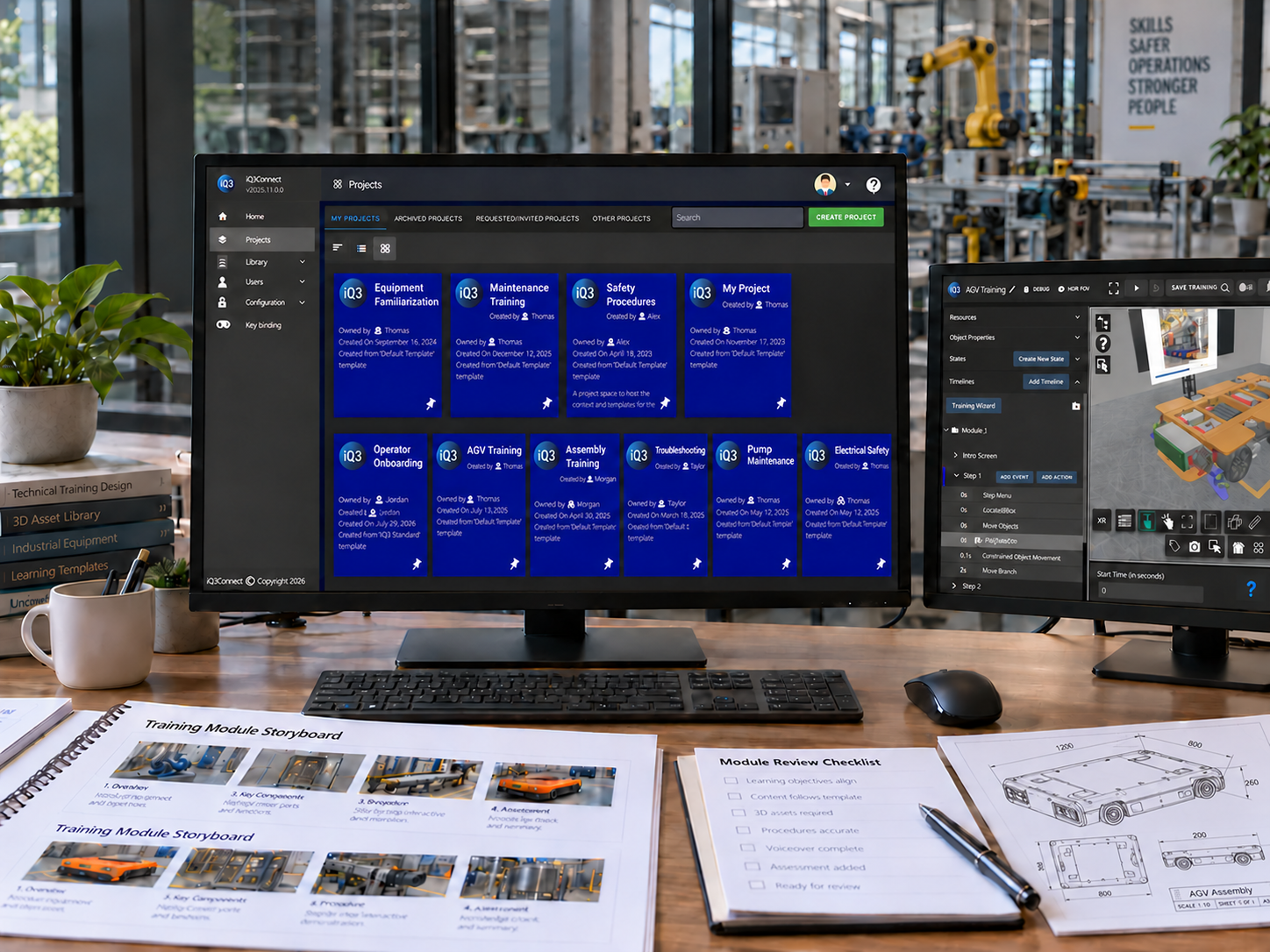
Engineering teams may already possess CAD models, operating manuals, maintenance procedures, and other technical documentation. Turning these resources into effective interactive training traditionally requires substantial manual effort and specialized software skills.
AI can help accelerate this process by assisting with content creation, organizing technical knowledge, generating procedural steps, and adapting training to different roles or languages.
But AI alone does not solve the complete problem.
Organizations also need the infrastructure to deliver, update, manage, and reuse those experiences across teams, locations, and devices.
A scalable digital platform that connects engineering information with interactive training and guided work provides the foundation. AI can then improve the efficiency and responsiveness of that system.
The strongest enterprise AI applications will be those embedded in practical workflows, where their value can be measured in time saved, improved quality, and reduced operational costs.
3. Economic Uncertainty Makes Scalable Deployment More Important
When economic conditions become less predictable, industrial organizations often scrutinize capital expenditures and technology investments more carefully.
Large transformation programs may face longer approval cycles, particularly when benefits are difficult to quantify or require extensive infrastructure changes.
This creates an advantage for solutions that can demonstrate value quickly and expand incrementally.
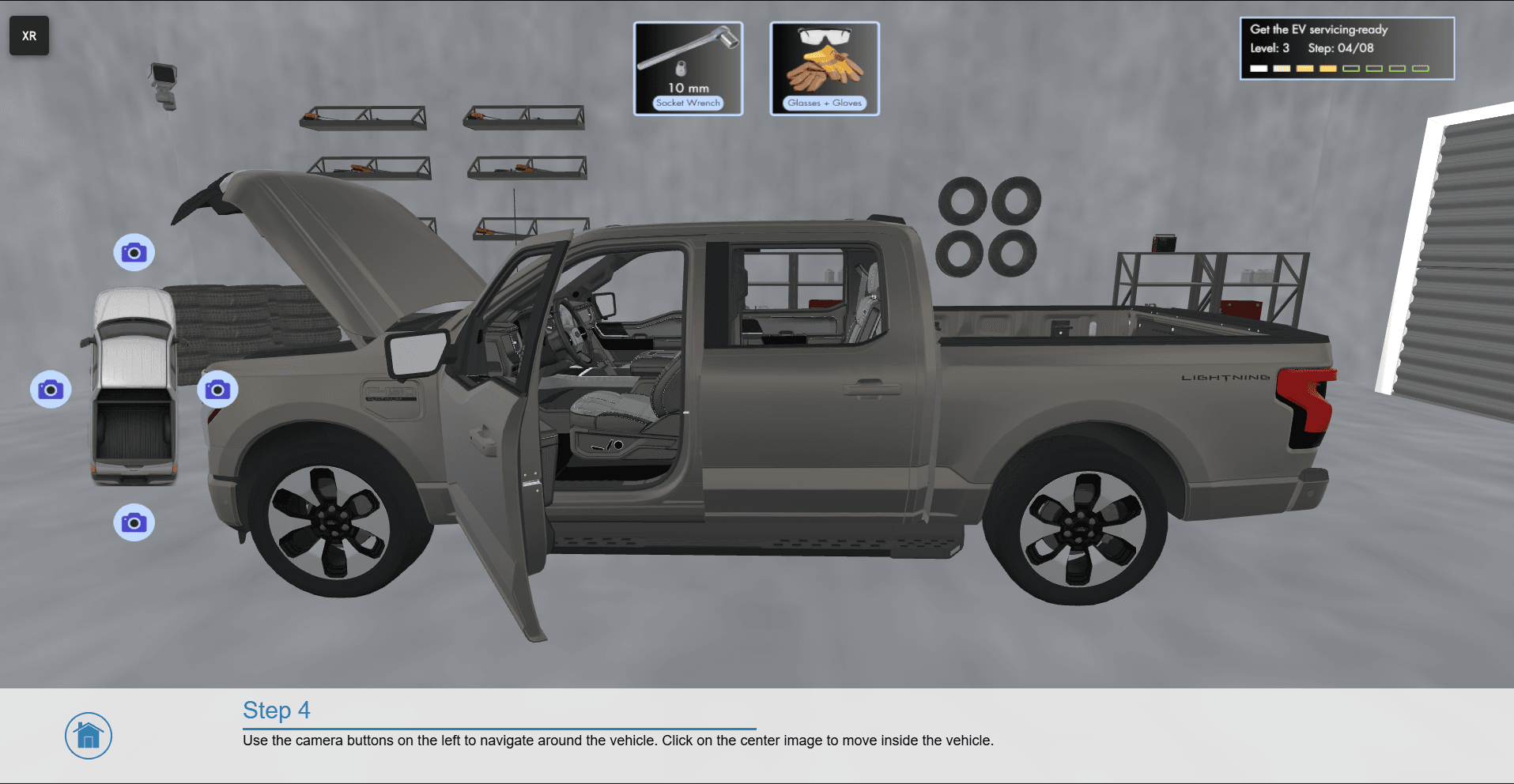
For example, an industrial equipment manufacturer might begin by digitizing a single maintenance or assembly training procedure. Once validated, the same approach can be extended across additional equipment, product lines, facilities, or customer training programs.
The ability to reuse existing 3D assets, update training without rebuilding complete applications, and deploy experiences directly through a web browser can substantially reduce the effort associated with scaling.
Instead of treating every new training experience as an independent software development project, organizations can establish a repeatable process for creating and distributing technical knowledge.
This changes the economics of digital training.
It also allows companies to begin with targeted projects, measure results, and expand based on demonstrated operational value rather than committing to a large, speculative investment upfront.
4. Industrial Knowledge Must Become Easier to Create, Share, and Update
One of the most significant barriers to industrial productivity is the difficulty of transferring specialized knowledge.
Experienced technicians and engineers possess valuable expertise, but that expertise is often distributed across manuals, engineering files, individual employees, and disconnected systems.
As equipment becomes more complex and experienced workers retire, the cost of transferring and maintaining this knowledge increases.
Interactive digital experiences can help bridge that gap by transforming existing engineering data and technical procedures into reusable training and operational resources.
For example, a 3D model initially used for an engineering review can also support equipment familiarization, maintenance training, assembly instructions, or collaborative troubleshooting.
Digital work instructions and interactive training can turn this knowledge into repeatable procedures, while immersive 3D collaboration workspaces enable distributed engineering and operational teams to review and interact with shared technical information.
When these experiences are centrally managed and accessible through a browser, globally distributed teams can access consistent, current information without specialized software installations.
Just as importantly, subject matter experts can participate directly in creating and updating content rather than depending entirely on software developers.
Making industrial knowledge reusable and continuously accessible is an important productivity opportunity in its own right.
5. The Next Phase of Industrial Digital Transformation Will Be Outcome-Driven
Enterprise technology adoption is entering a more pragmatic phase.
AI, immersive technologies, digital twins, and advanced visualization will continue to evolve. But industrial buyers will increasingly evaluate these investments against fundamental business metrics:
How quickly can employees become proficient?
How much can training and support costs be reduced?
How consistently can procedures be delivered across locations?
How easily can existing technical knowledge be reused?
How quickly can solutions be deployed, updated, and scaled?
These questions should guide technology strategy from the beginning.
At iQ3Connect, this is the principle behind our browser-based platform for industrial training, digital work instructions, and immersive collaboration. By making complex engineering data accessible and interactive across devices, we help organizations create, deliver, and scale practical digital experiences without relying on traditional application development for every new use case.
AI creates additional opportunities to accelerate these workflows, but the underlying objective remains unchanged: help industrial teams work more efficiently, safely, and effectively.
Conclusion: Sustainable Innovation Starts With Measurable Value
Periods of economic and technological uncertainty often create pressure to distinguish between innovation that attracts attention and innovation that delivers sustained value.
For industrial enterprises, the opportunity lies in using digital technologies to improve the productivity of people, processes, and existing engineering assets.
AI can accelerate that transformation. But scalable deployment, reusable content, accessible technical knowledge, and measurable operational outcomes are what turn technological potential into lasting business value.
The next competitive advantage in industrial technology will not come from adopting the most AI. It will come from achieving the greatest measurable improvement in how work gets done.
Explore how iQ3Connect helps industrial organizations scale technical training, digital work instructions, and engineering collaboration through a unified, browser-based platform.