E-Learning vs. Immersive Learning: Choosing the Right Training Solution
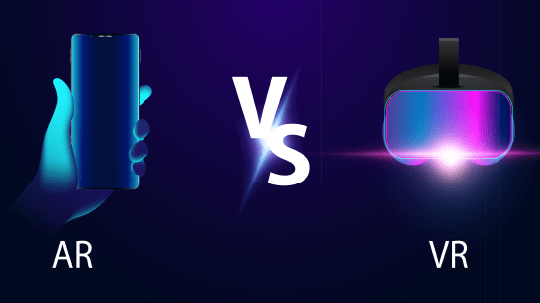
In today’s rapidly evolving industrial and enterprise environment, organizations must choose training solutions that effectively build workforce skills, improve safety, and support long-term operational readiness. While traditional e-learning remains a foundational training method, immersive learning—powered by VR, AR, and 3D simulations—has emerged as a transformative alternative.
This guide compares both approaches and explains how iQ3Connect elevates immersive learning with SCORM-compatible, browser-based XR training that seamlessly integrates into your existing LMS.
What Is E-Learning?
E-learning refers to structured online learning delivered through digital content such as videos, quizzes, exercises, and self-paced modules. It enables employees to access training anywhere, anytime, making it ideal for distributed teams.
Common E-Learning Formats
- Webinars and live virtual classrooms
- MOOCs and large-scale online courses
- Custom training modules for company-specific processes
- Compliance, HR, and onboarding content
Benefits of E-Learning
1. High Accessibility
Employees can access training from any location or device, ensuring flexibility for global or remote teams.
2. Cost Efficiency
E-learning eliminates travel, facility, and instructor fees, lowering the overall training budget.
3. Wide Content Availability
Organizations can select from extensive content libraries covering technical, managerial, and compliance training.
Challenges of E-Learning
- Limited hands-on practice and real-world skill transfer
- Lower engagement due to passive content formats
- Difficult to assess practical, skills-based competencies
- Self-paced training often leads to low completion rates
- Not effective for safety or equipment-based training
These limitations have accelerated the adoption of immersive, simulation-based training. :contentReference[oaicite:2]{index=2}
What Is Immersive Learning?
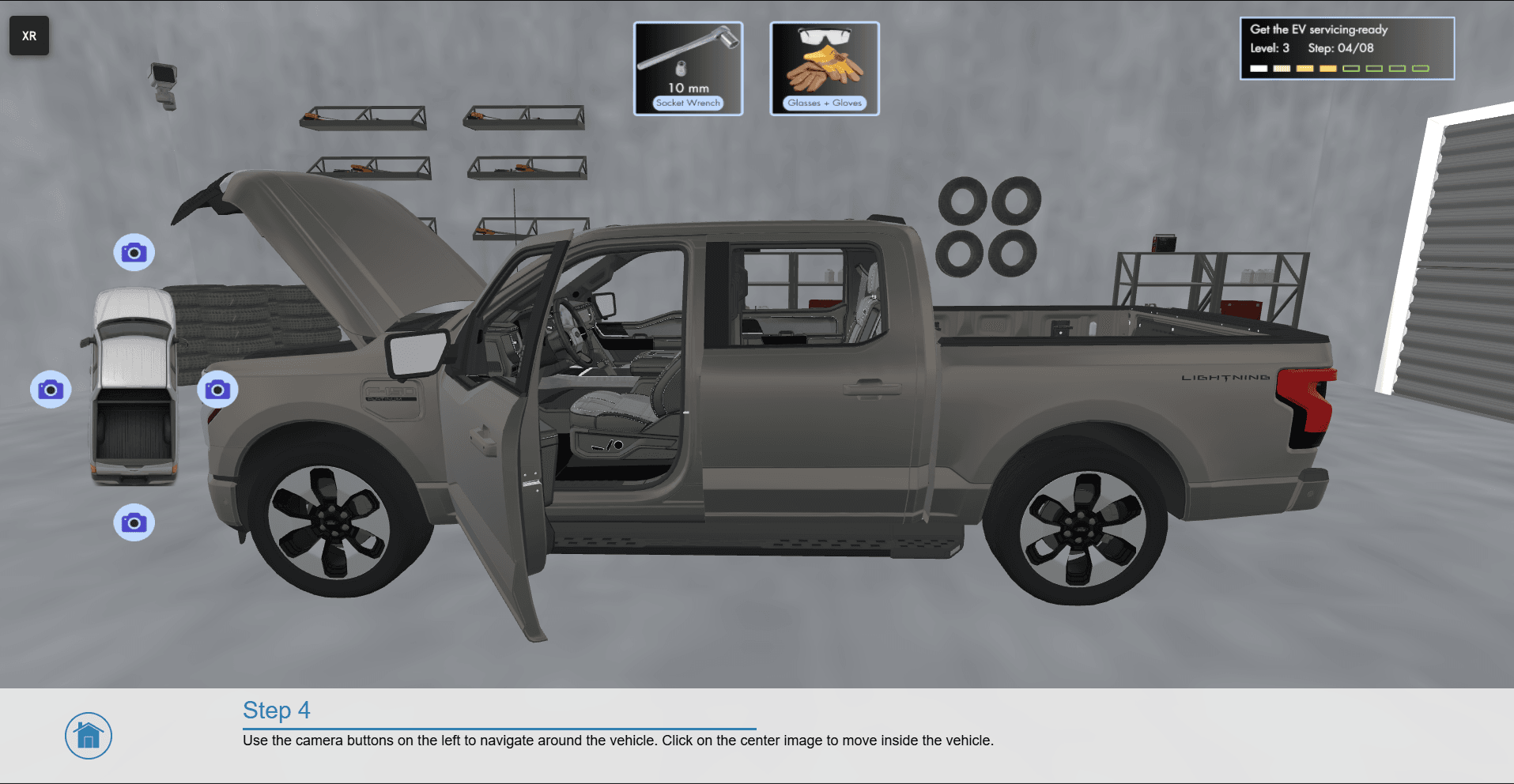
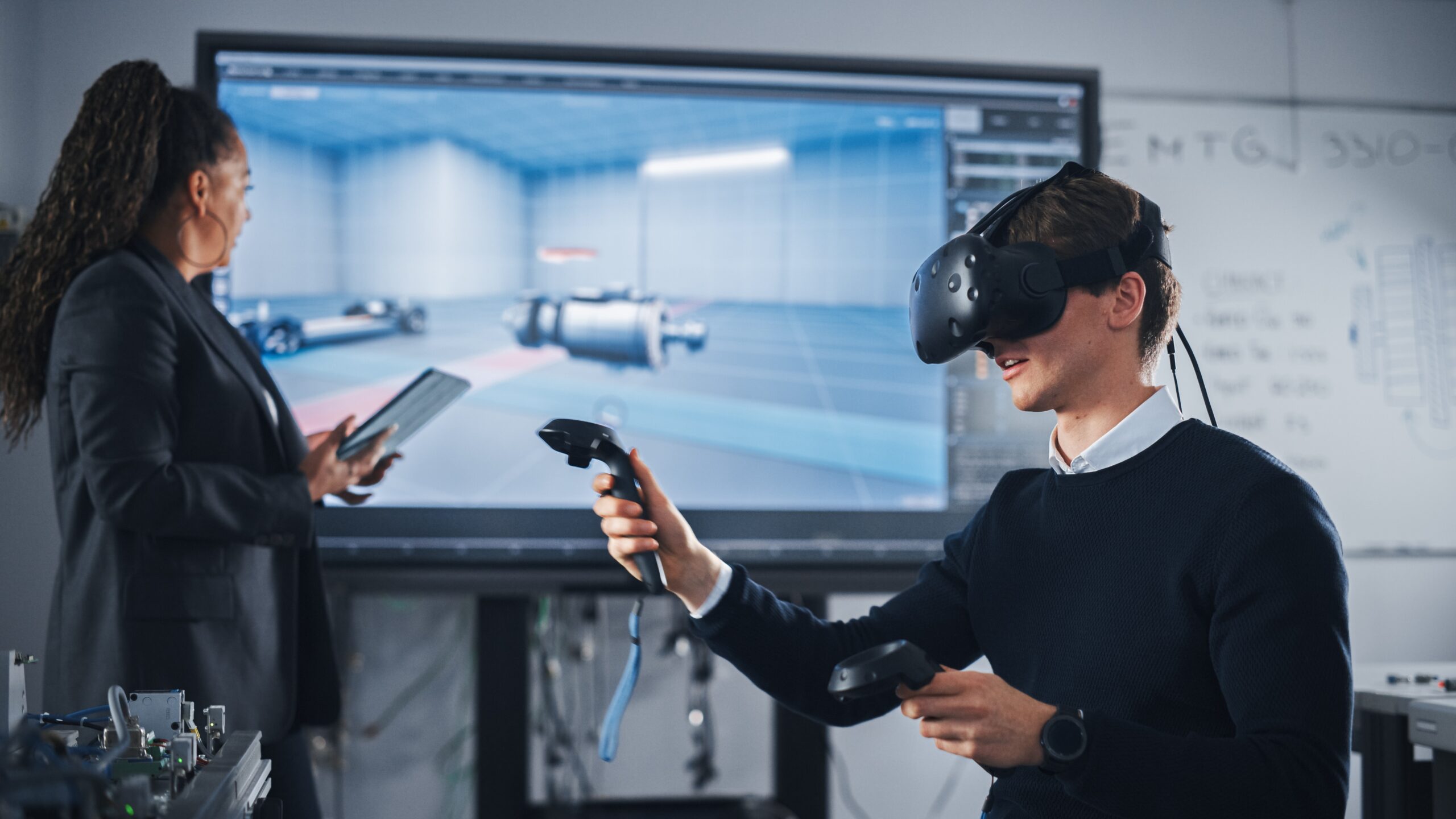
Immersive learning uses VR, AR, and 3D interactive simulations to place learners inside realistic, experiential environments. This approach is ideal for technical, hands-on, and safety-critical roles where real-world practice is limited or risky.
Where Immersive Learning Excels
- Equipment operation and maintenance
- Workplace hazard identification and safety training
- Emergency and high-risk scenario simulations
- Procedural training and workflow guidance
- Team collaboration and interactive group activities
Benefits of Immersive Learning
1. Higher Engagement
Immersive environments capture attention, improving retention and learning outcomes.
2. Practical Hands-On Skills
Learners safely practice real tasks, develop muscle memory, and build confidence without risking equipment or safety.
3. Increased Motivation
Realistic scenarios and interactive simulations make training more enjoyable and meaningful.
4. Safer and More Effective Safety Training
Critical and hazardous scenarios can be simulated repeatedly without real-world danger.
5. Scalable Across Teams and Locations
Immersive modules can be deployed globally, reused at scale, and accessed at any time.
6. Enhanced Team Collaboration
Multi-user virtual environments support shared training sessions, communication, and team problem-solving.
How iQ3Connect Enhances Immersive Learning
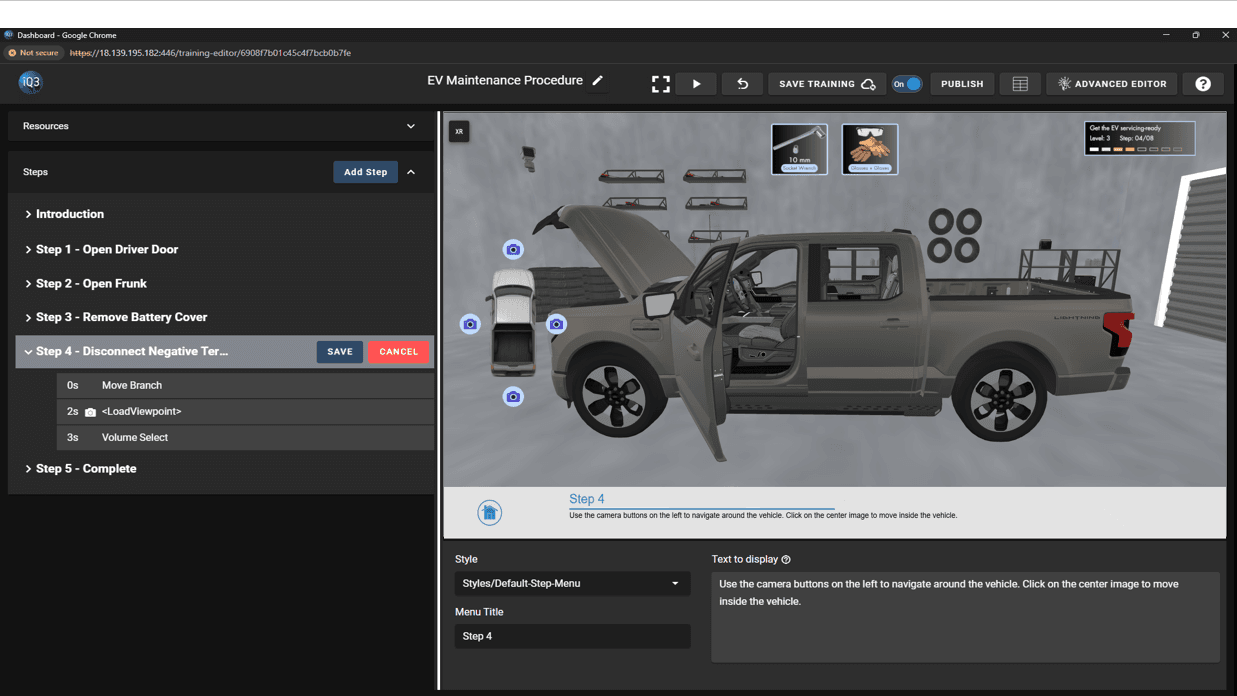
iQ3Connect delivers immersive learning through a web-based, no-code XR platform—eliminating the need for complex installations, specialized hardware, or technical expertise. Everything runs directly in the browser. :contentReference[oaicite:5]{index=5}
1. No-Code Content Creation
Anyone can build immersive VR/AR training experiences by uploading documents, images, videos, 3D models, quizzes, or guided workflows.
2. Realistic Safety and Technical Training
Create interactive simulations of industrial environments, equipment, and emergency scenarios—all with assessment tools built in.
3. Remote Collaboration at Scale
Host multi-user XR sessions with 50+ simultaneous participants via a simple shareable link.
4. Device Compatibility
Learners access XR content on laptops, desktops, mobile devices, or VR headsets—all via a standard web browser.
5. Seamless Integration of Existing Assets
Convert existing PDFs, videos, manuals, and 3D files into immersive, interactive XR training modules.
SCORM Integration with Your Existing LMS
One of the greatest strengths of iQ3Connect’s immersive learning platform is its compatibility with existing enterprise learning ecosystems. The platform supports full SCORM 1.2 and SCORM 2004 integration, allowing organizations to deploy web-based VR/AR content directly within their Learning Management System.
How SCORM Integration Works
- Export XR training as SCORM packages for upload into any SCORM-compliant LMS
- Track learner progress including completion, quiz scores, interactions, and duration
- Launch immersive simulations from the LMS with no installation required
- Standardized reporting using familiar LMS analytics dashboards
- Centralized training management for both e-learning and immersive modules
The result is a seamless blend of traditional e-learning and immersive XR experiences—managed, delivered, and tracked through the same LMS your organization already uses.
Benefits of SCORM-Enabled Immersive Learning
- Consistent learner tracking across all training formats
- Reduced administrative overhead
- Unified reporting and analytics
- Easy integration with existing onboarding, compliance, and safety workflows
- Fast deployment with minimal IT involvement
SCORM integration ensures that immersive learning is not a standalone tool—it becomes a powerful extension of your established training ecosystem.
E-Learning vs. Immersive Learning: Which Should You Choose?
| Training Method | Best For | Limitations |
|---|---|---|
| E-Learning | Theory, compliance, soft skills, general knowledge | Lower engagement, limited hands-on practice |
| Immersive Learning | Technical skills, safety, equipment use, collaboration | Requires 3D content (simplified with iQ3Connect’s no-code tools) |
The most effective approach blends the two: e-learning for foundational knowledge and immersive learning for hands-on practice.
Conclusion
E-learning and immersive learning each offer valuable benefits for workforce development. However, immersive learning delivers unparalleled realism, engagement, and practical skills—especially for industrial and safety-critical environments.
With iQ3Connect’s browser-based XR platform and SCORM integration, organizations can easily bring immersive training into their existing LMS ecosystem, enabling scalable, effective training that drives real operational impact.